Research group Coastal Ecosystem Restoration
Research line within the Coastal & Marine Systems lectureship
Open days
-
Online Open Day
4 June



Research line within the Coastal & Marine Systems lectureship
Online Open Day
4 June
Online Open Day
4 June
Research line within the Coastal & Marine Systems lectureship
The Coastal Ecosystem Restoration group conducts research into interventions that contribute to the restoration of disturbed and degraded coastal ecosystems, thereby providing a joint benefit for both humans and nature.
Many marine ecosystems have been severely disrupted and degraded by human activities. As a result, ecosystem services such as fisheries, coastal protection, and tourism are under pressure. Biodiversity is declining, and the resilience to recover from disturbances is diminishing. Through Coastal Ecosystem Restoration, ecosystem functions are restored, and ecosystem services are preserved. The research in this associate professorship focuses on:
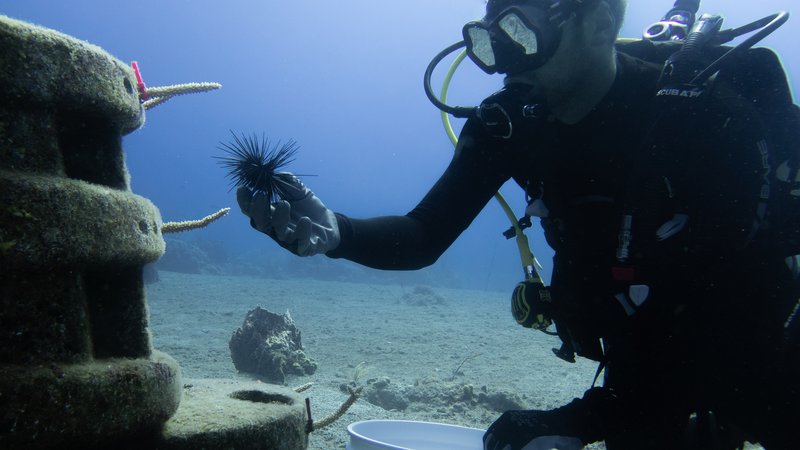
Examples of our research include the development of a new type of artificial reef or the restoration of important algae-eating sea urchins on coral reefs.
These are examples of experiments we have conducted in the past (group members in bold):
All publications from the ‘Coastal Ecosystem Restoration’ group can be found on Google Scholar.
Together we can achieve more! That’s why we are keen to collaborate with research and practice. Contact me if you want to work together.
Are you interested in contributing to our research? We have many internship and thesis positions available. Send me an email with what you would like to do, your motivation, CV, and (underwater) research experience.
YouTube: @ReefGrazerResearchGroup
LinkedIn: hvhl-src
Name: Alwin Hylkema
Email: alwin.hylkema@hvhl.nl
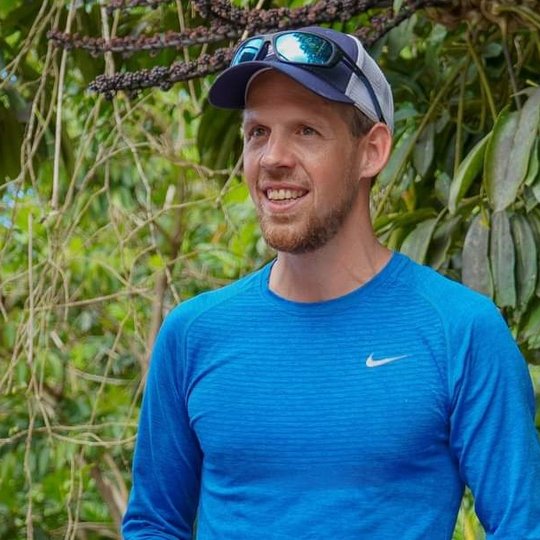
"It concerns me how our marine ecosystems, especially coral reefs, are threatened by human activity. With my research, I want to contribute to preserving and restoring coastal ecosystems and the important functions they perform for us."