Alwin Hylkema
Associate lector Coastal Ecosystem Restoration at Van Hall Larenstein University of Applied Sciences.
Open days
-
Online Open Day
4 June



Associate lector Coastal Ecosystem Restoration at Van Hall Larenstein University of Applied Sciences.
Online Open Day
4 June
Online Open Day
4 June
Associate lector Coastal Ecosystem Restoration at Van Hall Larenstein University of Applied Sciences.
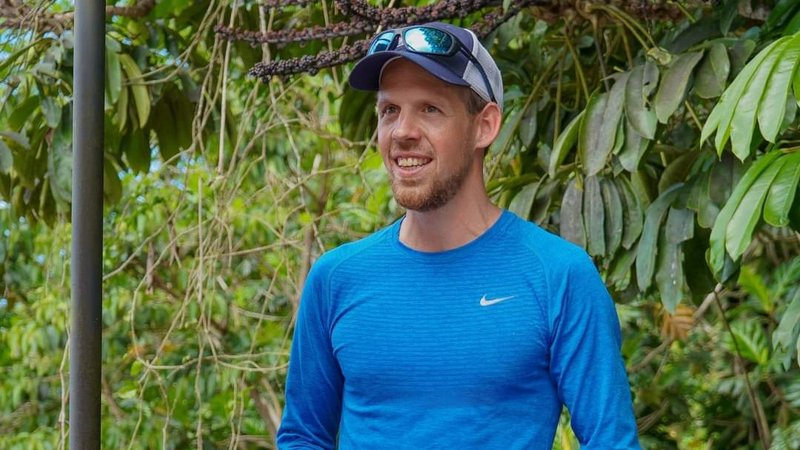
Dr. Alwin Hylkema is associate professor of Coastal Ecosystem Restoration. Based at the Saba Research Center on Saba, Caribbean Netherlands, he coordinates research to restore coral reefs and other tropical marine ecosystems affected by human impact. This is achieved using innovative methods with herbivorous reef grazers, such as sea urchins, crabs, and snails, which reduce algae on the reef, giving corals more space to grow.
After obtaining his PhD from Wageningen University in July 2022, with a focus on artificial substrates to restore Caribbean coral reefs, Alwin became associate professor 'Coastal Ecosystem Restoration'. In addition to his work for Van Hall Larenstein University of Applied Sciences, Alwin works part-time as a lecturer-researcher for the Marine Animal Ecology group at Wageningen University.
"The underwater world has something magical for me. From above the water, it seems like not much is happening, but once you go below the surface, you see how many species live here, how each species has a place and role in the ecosystem, and how fantastically beautiful it is. It breaks my heart to see how our marine ecosystems, especially coral reefs, are threatened by human actions. Through my research, I aim to contribute to the conservation and restoration of coastal ecosystems and their crucial ecosystem services."
In collaboration with local conservation organizations, governments, research institutions, and companies, Alwin initiated several projects to improve the resilience of coral reefs so they can recover from disturbances. Projects like ReefGrazers and Diadema II combine aquacultural and ecological knowledge to develop new methods to increase the density of herbivorous grazers, such as sea urchins, crabs, and snails, thereby reducing algal growth on the reef and giving corals more space. Under Alwin's leadership, various innovative reef restoration approaches have been developed, including a new design for artificial reefs (Moreef, www.moreef.com), a new method for breeding sea urchins, and a new approach for restoring the same species of sea urchins by simply providing settlement substrate.
Geographically, the research focuses on the Caribbean Netherlands. The islands of Bonaire, Saba, and St. Eustatius have been special municipalities of the Netherlands since 2010 and host an enormous biodiversity. However, a significant portion of this biodiversity is severely threatened, and through his research, Alwin aims to contribute to the preservation and restoration of the fragile Caribbean coastal ecosystems. In addition to his work in the Caribbean Netherlands, he also conducts research on other Caribbean islands and in Dutch coastal waters, such as the Wadden Sea and the Eastern Scheldt.
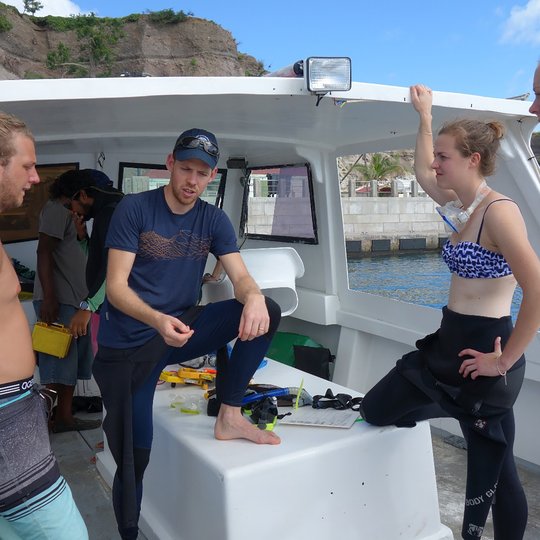
Veel mariene ecosystemen zijn ernstig verstoord en gedegradeerd. Hierdoor komen ecosysteemdiensten onder druk te staan. De biodiversiteit gaat achteruit en de veerkracht om te herstellen van verstoringen neemt af. Door middel van Coastal Ecosystem Restoration worden ecosysteemfuncties hersteld en blijven ecosysteemdiensten behouden.