SOILCRATES
Healthy soil is the foundation of our food system, a prerequisite for clean water, important for biodiversity and contributes to resilience in times of climate change.
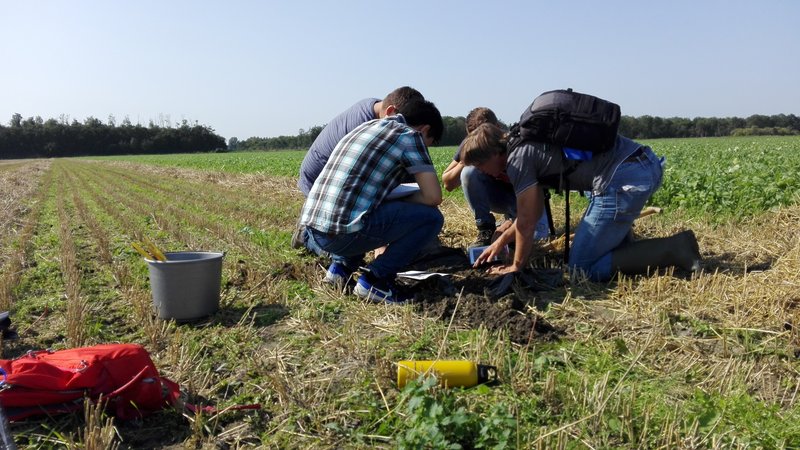


Healthy soil is the foundation of our food system, a prerequisite for clean water, important for biodiversity and contributes to resilience in times of climate change.
Healthy soil is the foundation of our food system, a prerequisite for clean water, important for biodiversity and contributes to resilience in times of climate change.
Some 60 to 70% of soils in Europe are (severely) affected by pollution and unsustainable land use practices. Addressing this is crucial, as healthy soil is the foundation of our food system, a prerequisite for clean water, and crucial for biodiversity. Healthy soil also contributes to resilience in times of climate change. Therefore, there is an urgent need for restoration and sustainable solutions.
The SOILCRATES project brings together 21 partners to contribute to the EU mission A Soil Deal for Europe. The project focuses on establishing four Living Labs in the Netherlands (Groningen, Friesland, Drenthe), France (Landes), Ireland (Midwest), and Spain (Granada). The goal is to monitor and improve soil quality within the agricultural sector. Increasing soil literacy is also a key objective of the project.
These Living Labs serve as incubators for experimentation and knowledge sharing, where local stakeholders (such as farmers, landowners, knowledge institutions, government agencies, businesses, and other interested parties) collaborate on the challenges surrounding soil health. Within each Living Lab, at least 10 experiments will be set up, based on input from farmers and other stakeholders.
Besides experiments, the project also strongly focuses on education and awareness: knowledge about soil processes and soil health will be widely disseminated through educational resources, policy summaries, and collaborations with other (European) initiatives.
By the end of SOILCRATES, four fully operational and sustainable Living Labs will serve as regional networks for knowledge, innovation, and practical application related to soil health. Within these Living Labs, collaboration will be conducted on improving soil structure and promoting biodiversity, among other things.
The project will increase understanding of soil processes, both among stakeholders and the broader community. Educational activities will strengthen soil literacy, which can lead to more sustainable land use and increase understanding of the importance of healthy soil. Furthermore, results and best practices will be demonstrated at at least 40 experimental sites and "lighthouses" that will serve as beacons for inspiration and knowledge sharing. Insights from these sites will inform the scaling up and broader application of sustainable soil practices in Europe.
Collaboration with other projects, the European Commission, and policymakers will further increase the impact. In this way, SOILCRATES contributes not only to innovation and scientific knowledge but also to concrete policy and practical solutions for sustainable soil management.
Name of lector/researcher: Loes Witteveen
Project duration: October 2024 to October 2028
Budget: € 11.900.000,-
Project partners:
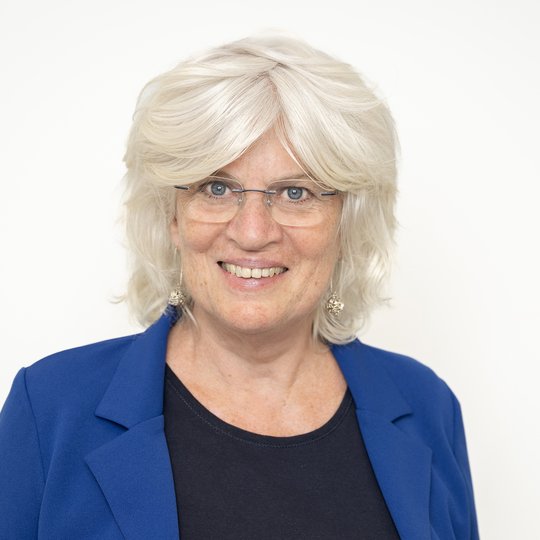
After a long period of working in the Caribbean and Central America, Loes Witteveen is working as a professor of the Communication, Participation & Social- Ecological Learning (CoPSEL) research group. Her research focuses on user-centred design, communication and dialogue in complex transition processes and social-ecological learning.