What is the case?
Wildlife crime is a growing problem. It leads to a loss of biodiversity and disrupts the social and economic relations in local communities. Poaching of elephants and rhinos has increased significantly in recent years, to the extent that their survival is threatened.
What does the project do about it?
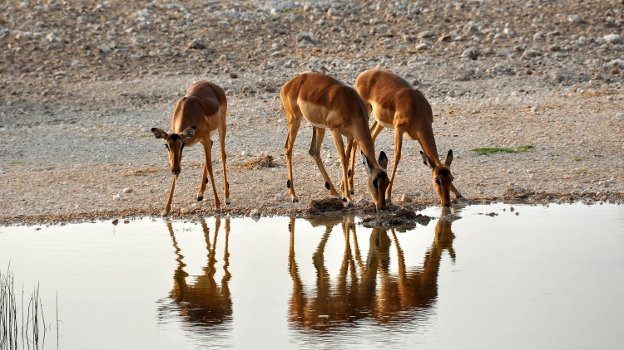
The four-year project aims to contribute with modern techniques to fundamental and practical animal knowledge for a current international wildlife management problem. This involves using the senses of ungulates, such as zebras and hartebeest, as detectors of poachers in the area. The challenge is to pick up the alarm signals and locations of these living networks of ungulates with biosensors and wirelessly transmit relevant information to park rangers. They can then take targeted action. The first two years, the system will be tested in the Netherlands at Zoo Beekse Bergen and areas of the Forestry Commission. Then the system will be rolled out and tested in Kenya over the next two years.
What does the project deliver?
The ultimate goal is to have a working prototype of the sensor network in Tsavo National Park in Kenya, where the alarm signals and locations of herds of ungulates can be measured, analysed, and interpreted by the park rangers.
Project data
Applied Research Group: Wiepk Voskamp-Harkema
Duration: 2018 - 2023
Project partners: SODAQ, Saxion University of Applied Sciences, Van Hall Larenstein University of Applied Sciences, Wageningen University & Research, World Wildlife Fund, Kenya Wildlife Services
This research is co-financed by the SIA, part of the Dutch Organisation for Scientific Research (NWO).