Van Hall Larenstein University of applied sciences

Future-proof polder Terschelling

Project working with local dairy farmers, businesses, and nature organisations to find solutions for dehydration and salinisation on Terschelling.

Open days

  • Online Open Day

    19 March

  • Online Open Day

    4 June

Future-proof polder Terschelling

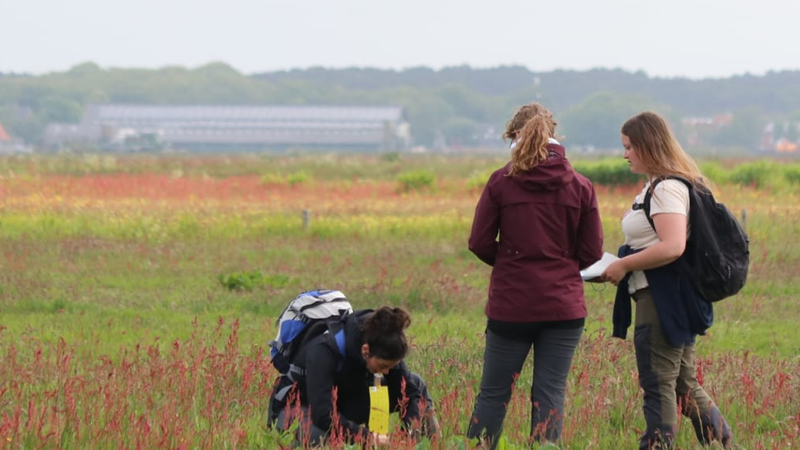
HVHL student bezig met bodemonderzoek in de polder van Terschelling

Open days

Project working with local dairy farmers, businesses, and nature organisations to find solutions for dehydration and salinisation on Terschelling.

Responses to Drought and Salinisation

In rural areas, climate adaptation is a daily visible challenge. This includes decreasing availability of fresh water and increasing salinisation, which puts pressure on agricultural productivity, drinking water production, and, last but not least, the quality of nature and landscape.

What is going on?

What is going on?

Due to the dry periods of 2018, 2019, and 2020, there is an urgent need for action perspectives on climate adaptation in agriculture. Observations from dairy farmers, agricultural nature associations, and nature organisations in the polder area of Terschelling highlight the need for robust solutions to maintain both production and nature functions in these times of climate change.

Logo Toekomstperspectief Polder Terschelling
What does the project do about it?

What does the project do about it?

The project involves addressing observed drought and salinization in pastures through trials. This is supported by an analysis of the entire water system and its users, based on monitoring, (ground)water models, and analyses of climate scenarios. Besides providing more insight into how the water and soil system works on Terschelling, explicit knowledge is gained, together with private parties, about the opportunities and effects of the tested solutions on land use. Additionally, it explores earning models (as incentives) for local (agricultural) entrepreneurs and organizations as part of a transition process. Collaboration within a Living Lab setting with physical facilities forms the basis for developing an integrated and shared vision, knowledge sharing, and involving residents, visitors, lecturers, and students.

How are we tackling it?

The research is funded by two different subsidy providers. The first part focuses primarily on agriculture in the polder (PPS subsidy). The second part takes a more integrated view of the users of the water system. The PPS part will be completed by the end of 2024, and the Waddenfonds part will be completed in the spring of 2026. The results of the research will be published on this website.


What does the project deliver?

What does the project deliver?

The goal of the project is to develop integrated solutions for drought and salinization on Terschelling together with local dairy farmers and involved organisations (nature organisations, water boards, local governments, and businesses). By gaining a better understanding of the physical, biological, and socio-economic systems of the meadow landscape and the island, and by conducting field trials, both ecologically and economically feasible action perspectives are developed in collaboration with the involved parties. Ultimately, the developed practical knowledge should help local dairy farmers make their operations climate-resilient and sustainable for the future on Terschelling. Additionally, the project provides opportunities for new business activities and scalable knowledge and experience in climate adaptation on islands and in coastal areas, both nationally and internationally.

Project information

Project information

Duration: 2022-2026
Senior researcher: Mindert de Vries
Project manager: Saskia van Gend

Projectpartners

Deltares, Wageningen Economic Research, ABT, Acacia Water, ANV Waddenvogels, DLF, Gemeente Terschelling, LTO-Noord, Melkveehouder C.G. Cupido, Provincie Fryslân, Staatsbosbeheer, Stichting De Zilte Smaak, Terschellinger Campinghouders Vereniging, Vitens, Vogelbescherming Nederland, Vogelwacht Terschelling, Wetterskip Fryslân.

Subsidies

Total project budget: 2.150.900 euro
Total HVHL budget: 892.500 euro
This project is financed by:

Externe website

Logo Provincie Fryslan