What is the case?
Equestrian sports depend on the complex interaction between horse and rider. However, assessing these interactions, both by trainers and judges, is a challenging task that often exceeds human processing capacity. Traditional assessment methods can lead to subjectivity and inconsistencies, creating a need for more standardised and objective assessment criteria.
What does the project deliver?
This project utilises eyetracking technology to provide an objective and detailed analysis of how riders visually interact with their horses during performances. By tracking eye movements, visual search patterns can be identified that indicate which elements judges focus on when assessing horse-rider combinations. This technology not only aids in performance evaluations but also contributes to the welfare of horses. It allows us to gain insight into the perspective and emotional state of horses during dressage performances, which is crucial for their physical and mental health.
Additionally, the knowledge of visual search strategies of judges is used to improve the training of judges. This enhances the transparency and quality of the assessment process in equestrian sports.
What are the project outcomes?
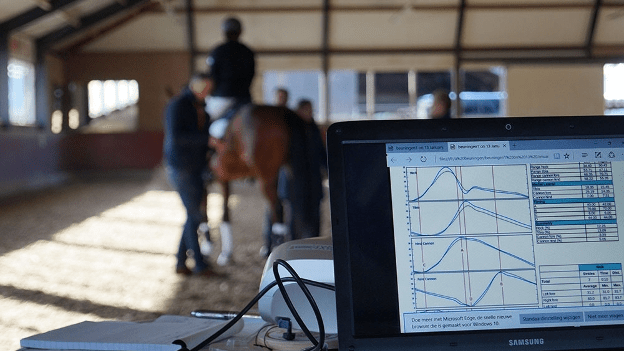
In collaboration with Tobii and associate professor Dr. Peter Reuter, the project aims to gain a deep understanding of the dressage test assessment process. The project examines the relationship between live visual attention patterns, assigned dressage scores, judges’ verbal comments, and the kinematic movement data of horse and rider. This comprehensive analysis can lead to:
- More standardised and objective performance assessments: By reducing subjectivity and bias, fairness and consistency in equestrian sports are improved.
- Improved horse welfare: By understanding the visual cues and stressors experienced by horses, welfare strategies can be optimised.
- Optimised training and development of judges: By revealing visual search strategies, training programmes for judges can be refined, leading to better and more transparent assessments.
Ultimately, this project will contribute to the advancement and professionalisation of equestrian sports, resulting in fairer competitions and improved horse welfare.