ECODAMI
Research project into alternative materials to make marine infrastructure more sustainable while enriching underwater wildlife.
Open days
-
Online Open Day
4 June



Research project into alternative materials to make marine infrastructure more sustainable while enriching underwater wildlife.
Online Open Day
4 June
Online Open Day
4 June
Research project into alternative materials to make marine infrastructure more sustainable while enriching underwater wildlife.
In the RAAK-public project ECODAMI (Ecologically Optimal and Sustainable Alternative Materials for Marine Infrastructure), Van Hall Larenstein University of Applied Sciences (VHL) collaborates with public entities such as Waterschap Noorderzijlvest, Rijkswaterstaat, and the Public Entity Saba, as well as partners from both the construction and ecological sectors. The interdisciplinary question being addressed is: "Which alternative materials can be used to make marine infrastructure more sustainable while simultaneously enriching the underwater environment?"
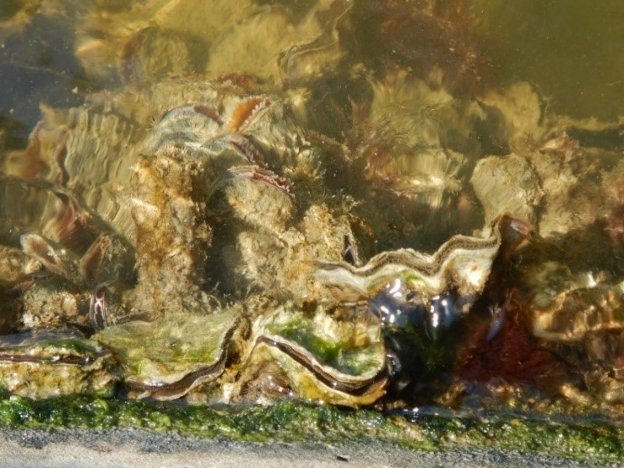
Worldwide, reefs built by bioengineers such as corals and shellfish provide important ecosystem services, including coastal protection, fisheries, and recreation. However, these reefs are under increasing pressure, and the loss of natural hard substrates leads to a decline in biodiversity and productivity of the marine ecosystem. At the same time, there is an increase in artificial hard substrates for marine infrastructure, such as dikes, ports, and breakwaters. Due to its good workability and wide applicability, concrete is the most commonly used material for marine infrastructure.
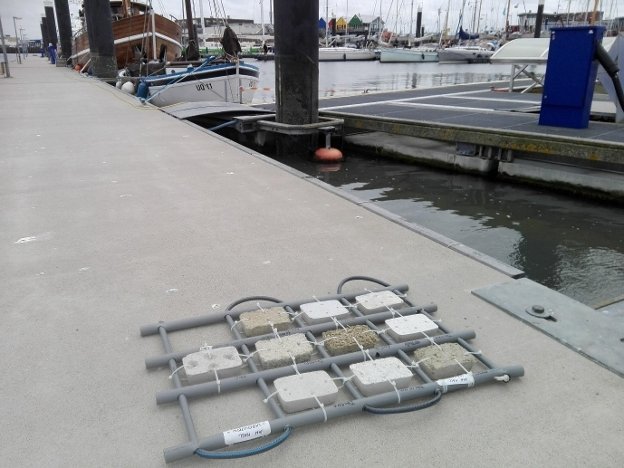
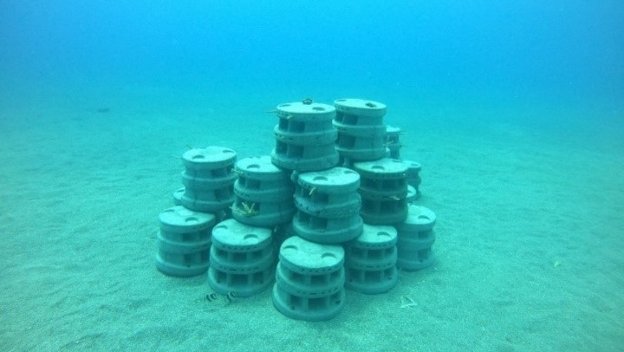
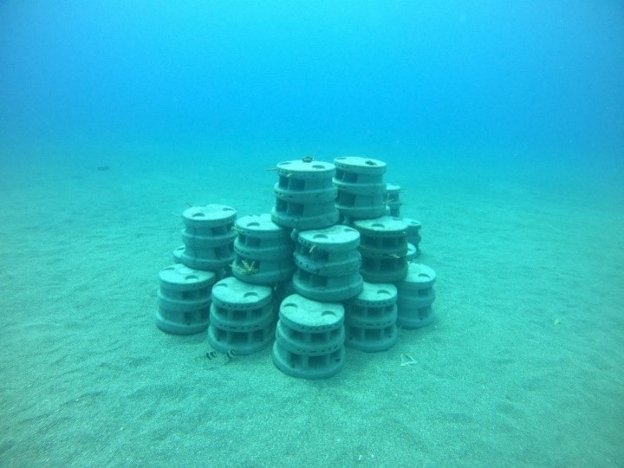
To answer this question, alternative materials for concrete are produced and tested for conventional properties such as workability and strength. The most promising materials are tested in experimental lab research for the settlement of indicator species, after which the best-performing materials are combined. Through experimental field research in the Wadden Sea, the Zeeland Delta, and Saba (Caribbean Netherlands), the development of benthic communities on the test blocks is investigated, leading to a final selection. In this way, the ECODAMI project results in sustainable and ecologically optimal construction materials that can be directly applied in marine infrastructure. To achieve this optimally, an interdisciplinary consortium has been assembled.
In the ECODAMI project, VHL collaborates with various knowledge institutes: Eindhoven University of Technology, University of Groningen, HZ University of Applied Sciences, and HAN University of Applied Sciences. Additionally, public entities such as Rijkswaterstaat North Netherlands, Waterschap Noorderzijlvest, and the Public Entity Saba are involved, as well as companies including NETICS, Witteveen+Bos, Bioclear Earth, Acroniq, and the Leeuwarden concrete plant.
This research falls under the Reef Restoration theme of the Coastal and Marine Management and Conservation applied research group. Within this theme, research is conducted on interventions that can accelerate reef restoration.