Van Hall Larenstein University of applied sciences

Business models in dairy chains

This project investigates business models of dairy chain actors and supporting parties to identify opportunities for scaling up climate-smart good practices.

Open days

  • Online Open Day

    19 March

  • Online Open Day

    4 June

Business models in dairy chains

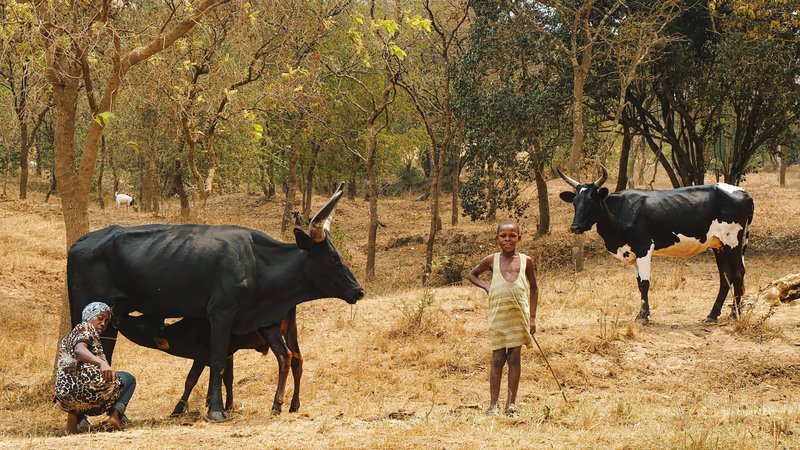
Koeien in Afrika met boeren gezin

Open days

This project investigates business models of dairy chain actors and supporting parties to identify opportunities for scaling up climate-smart good practices.

What is the case?

Despite many initiatives in the dairy sector, the scaling up of sustainable practices in East Africa remains insufficient. The greenhouse gas emissions per litre of milk are high, mainly due to the low production per cow in traditional farming systems. The main question is how emissions can be reduced while simultaneously increasing income. This project aligns with Kenya's "Nationally Appropriate Mitigation Actions" (NAMA) objectives. Despite the challenges, Kenya serves as an example for Ethiopia, where milk production is generally much lower, and greenhouse gas emissions per litre of milk are much higher.

Improvement of dairy chains in Ethiopia and Kenya

This project examines the business models of chain actors and supporting parties to identify opportunities for scaling up climate-smart good practices. First, greenhouse gas emissions from the different farming systems are calculated, and then potential management improvements are investigated.

Six case studies in the dairy chain

Three in Kenya and three in Ethiopia, with varying degrees of market orientation.

  • Three PhD students act as principal researchers, each responsible for two selected chains.
  • Seventeen Master’s students (eleven from Van Hall Larenstein University of Applied Sciences) will conduct their graduation projects through this project.
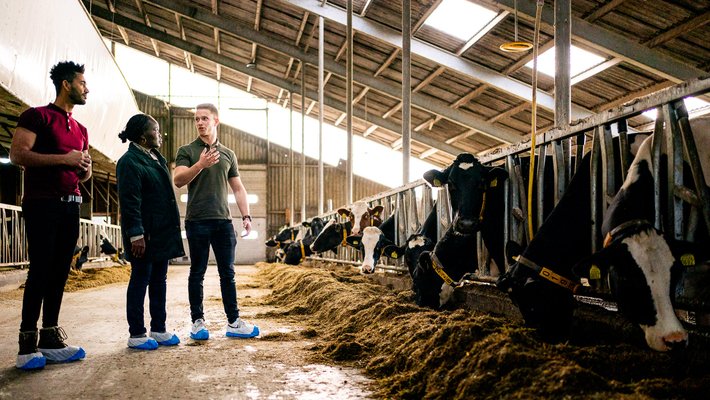
Studenten IDCM bestuderen bedrijfsvoering in de Dairy Campus Leeuwarden

What does the project deliver?

For each of the six chains, business models are described for actors (suppliers, dairy farms, dairy cooperatives, and dairy processors), as well as for one influential supporting party in the chain. Greenhouse gas emissions from primary production and within the chain are calculated. Several models indicate which feasible adjustments the actor can implement and which are beyond the actors' control. Both the perspective of the actors themselves and the expectations of other stakeholders are considered. In total, around 25 business models are developed, along with emissions calculations and comparative situations between the two countries.

Project details

Applied Research Group:
Robert Baars, Climate Smart Dairy Value Chains

Duration:
2022 - 2024

Project partners:

  • Michigan State University (US)
  • United States International University - Africa (Kenya)
  • Jimma University (Ethiopia)
  • AgriProFocus (NL)
  • UNIQUE forestry and land use (Germany)
  • Van Hall Larenstein (NL)