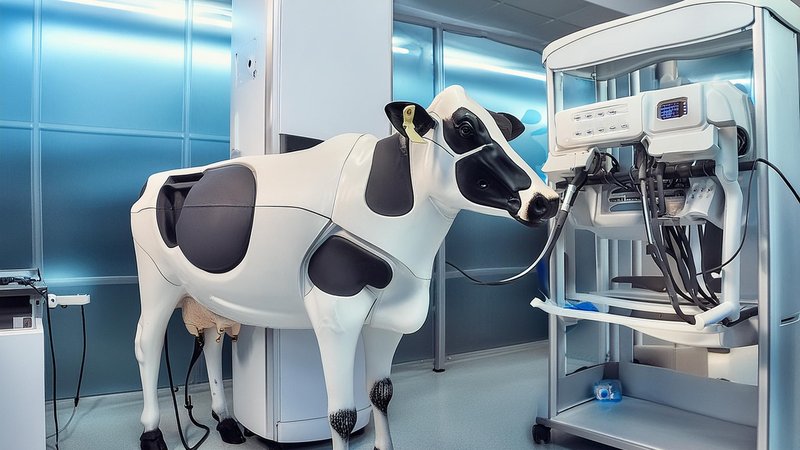

To reduce animal studies, work is being done in the Netherlands and internationally to develop alternative modeling tools to predict the transfer of (new) substances such as additives, veterinary medicines, mycotoxins, bioactive substances and contaminants.
Due to the development of new animal feed products, supplements, and veterinary medicines, substances are introduced into the beef and dairy supply chain that can be beneficial but in some cases also harmful to human and animal health. Currently, animal studies are the gold standard for studying the transfer of compounds from feed, veterinary medicines, and supplements to cows. These studies are time-consuming, expensive, and ethically controversial. Cows still rank in the top 10 most used animals for testing in the Netherlands and Europe.
To reduce animal studies, alternative modelling tools are being developed in the Netherlands and internationally to predict the transfer of (new) substances such as additives, veterinary medicines, mycotoxins, bioactive substances, and contaminants. The project 'Artificial cow model' further develops existing physiologically based kinetic (PBK) models into practically applicable computer models. Additionally, simple and advanced cow-specific in vitro (e.g., organoids) and in silico models are developed and applied to determine the absorption, distribution, metabolism, and excretion (ADME) of substances, which can serve as substance-specific input parameters in the PBK model.
A freely available computer model that can calculate the transfer of substances from animal feed products, veterinary medicines, and supplements to cows (e.g., meat, milk). The in silico models describing the distribution of substances between tissues and blood in cows, along with the protocols for the newly developed in vitro ADME models, will also be freely available.
Name of lector/researcher: Dr. M. Strikwold ERT
Project duration: 4 years, starting 1 September 2022
Key partners: Hoogland BV FrieslandCampina Netherlands Association for Phytotherapy (NVF) RIVM Utrecht University Van Hall Larenstein University of Applied Sciences
Other stakeholders: Royal GD Nevedi Wageningen Food Safety Research (WFSR)