Food Application Centre for Technology (FACT)
Research facility of Van Hall Larenstein University of Applied Sciences for innovative dairy and food technology.
Open days
-
Online Open Day
4 June



Research facility of Van Hall Larenstein University of Applied Sciences for innovative dairy and food technology.
Online Open Day
4 June
Online Open Day
4 June
Research facility of Van Hall Larenstein University of Applied Sciences for innovative dairy and food technology.
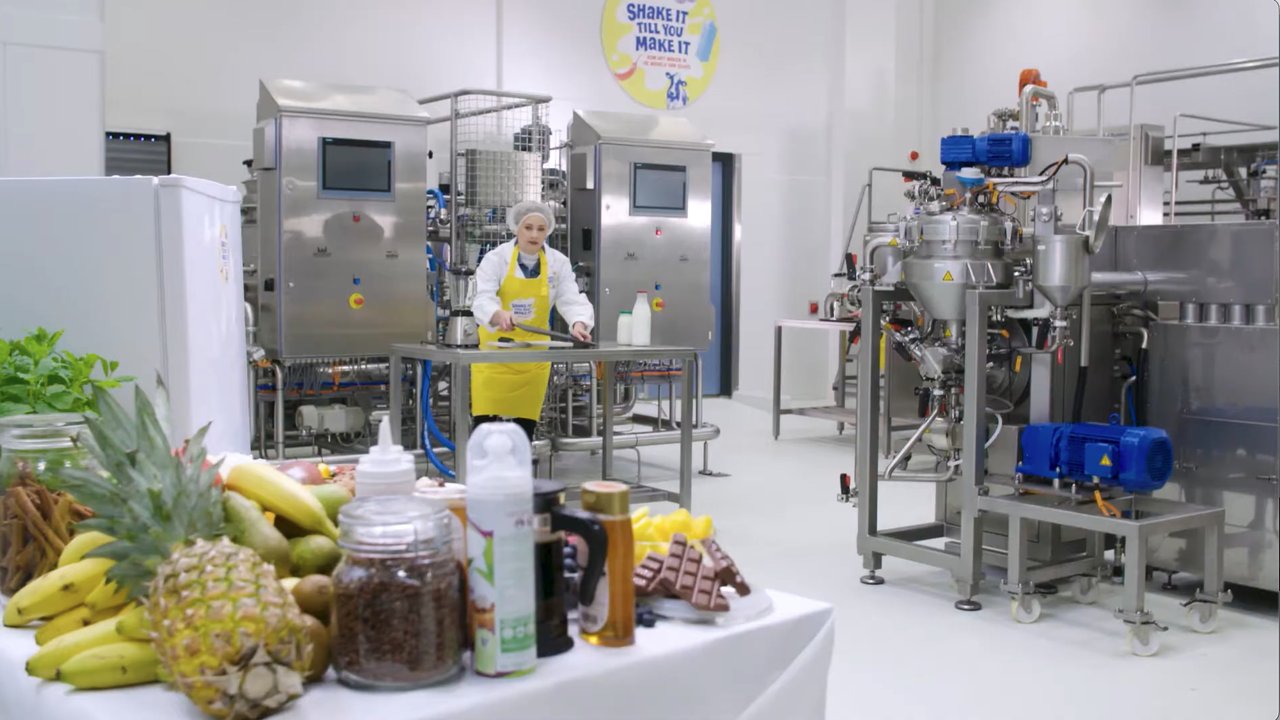
The Food Application Centre for Technology (FACT) is a fully equipped research facility where companies, knowledge institutions, and businesses can conduct (or have conducted) experiments. It is a testing ground in the field of food technology. It is an accessible meeting place where knowledge is generated and shared. New product and process concepts are developed in close collaboration between (SME) companies and knowledge institutions.
Van Hall Larenstein University of Applied Sciences (VHL) and Nordwin College have jointly initiated the Food Application Centre for Technology (FACT) as a research and training facility. The FACT offers opportunities for practice-oriented education and research.
Substantially increased business activity and employment (both qualitatively and quantitatively) in the Northern Netherlands' SME food sector, with a sufficient supply of highly qualified personnel, thanks in part to successful product and process innovation in close collaboration between companies and knowledge institutions.
Making available a testing ground in the field of food technology: an accessible meeting place where knowledge is generated and shared, and new product and process concepts are developed in close collaboration between SME companies and knowledge institutions.
The FACT is an intensive collaboration with the business sector and contributes to the innovative capacity of entrepreneurs. The Sustainable Development Goals are a common thread in this collaboration.
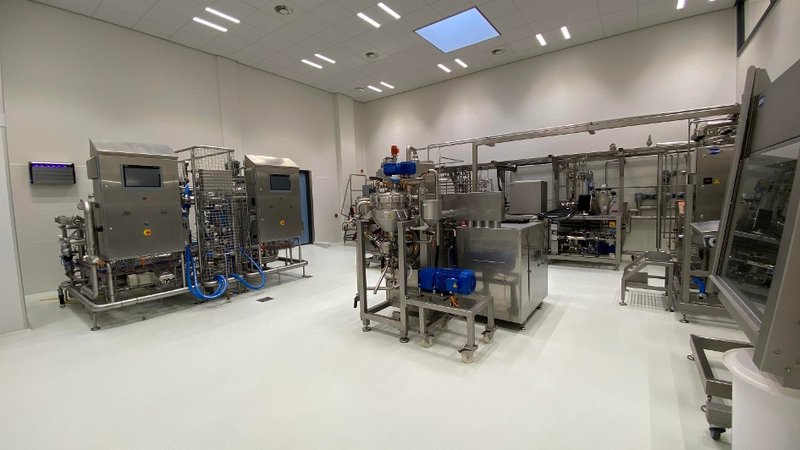
The FACT is a research, training, and demonstration facility with modern pilot food processing equipment. The FACT focuses on product and process innovation for the food industry, with an emphasis on dairy, beverages, sauces, and bakery products.
For practice-oriented research, professors from Van Hall Larenstein University of Applied Sciences (VHL) use the Food Application Centre for Technology. Together with businesses and other organisations, practice-oriented research is conducted into product and process. Pilot productions can be carried out using the equipment at FACT. The FACT has a COKZ certification for food grade production of products.
Contact a professor or the business developer at FACT to explore the possibilities of conducting research at FACT. Depending on the objectives, budget, and urgency, it is possible to carry out (part of) the research with students.
The variety of projects and project partners is vast: from small research projects conducted by students to long-term European research, from projects with a sauce manufacturer to SMEs, and from university hospitals to farmers.
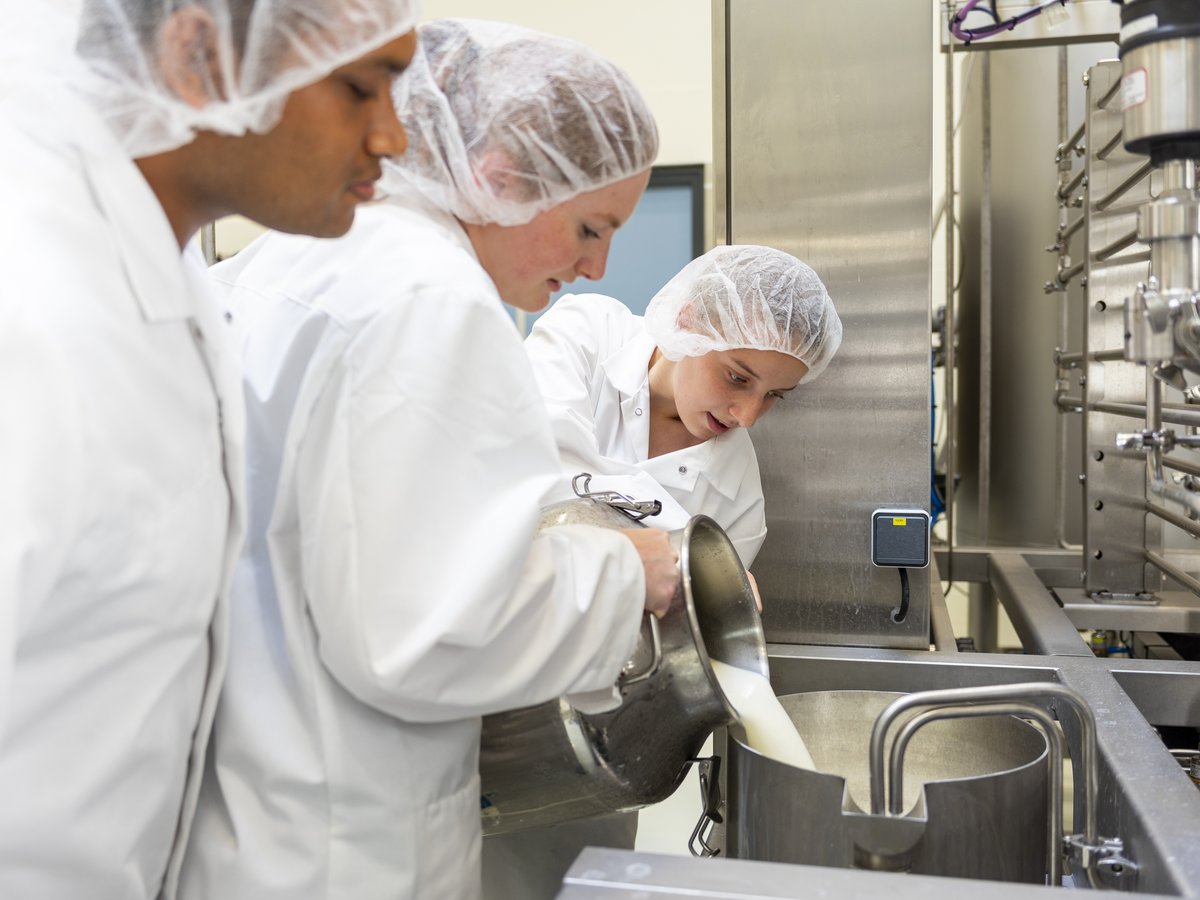
Interested Food Technology students are introduced to the FACT during open days. Throughout the program, various modules focus on the FACT, and demonstrations are held. In the third year, students can choose an assignment with one of the professorships. The FACT provides the practical facilities and support for this. These assignments are highly relevant as they originate from the business sector.
The Dairy minor gives various student groups the opportunity to carry out the practical part of the minor at the FACT. In this way, food grade products can be made that can be safely and responsibly tested by test subjects and/or collaborating companies.
For graduation assignments and internships, students can make use of the FACT. To explore the possibilities, you can contact the manager of the FACT or one of the professors.
In addition to a process technology approach, the projects also have an analytical component. For example, the Forensic Laboratory Research program is involved in projects within the FACT. Programs also make use of the business network.
Education, practice-oriented research, and businesses make use of the equipment within the FACT. This equipment is very diverse. The advantage of the FACT is that food grade productions can be realized.
The DigiCooker is an installation supplied by OMVE, where liquid raw materials, including milk, can be homogenized, pasteurized, or sterilized and filled (in bag-in-box or aseptically manually) at a scale of 100 L/hour. Process conditions can be set within wide ranges of temperature and time, and sensors record the actual values of the conditions realized during the process. It is connected to an adjustable CIP (Cleaning in Place). The realized process conditions are read out and form the input for models that can predict quality parameters. For this, we collaborate with NIZO, which provides process models for education and research. Van Hall Larenstein University of Applied Sciences (VHL) supplements the process models and converts them into an education-relevant software platform.
The yogurt unit consists of 4 separate 5 L vessels with a stirring mechanism. It can heat up to 50°C and has temperature, time, and pH control. The product can then be filled into bag-in-box or specific packaging units.
The membrane installation, supplied by Wafilin Systems, includes a micro/ultrafiltration unit and a nanofiltration/reverse osmosis (RO) unit. The capacity depends on the raw material and process but is roughly 50-100 L/hour. It uses commercially available membranes, which can be of various types and compositions. Currently, there is a chlorine dioxide (ClO2) test installation connected for microbial decontamination of the system.
The Sauce Unit, supplied by AZO Liquids, has a capacity of approximately 10 L (batch process). The process can be carried out under partial vacuum. Various sauces and emulsions can be prepared, as well as other products that require a cooking and mixing step, such as ice cream mix or custard. Together with Oliehoorn, this facility is used for making test batches of sauces, for product and process optimization.
The Sterilization Unit, supplied by SteriFlow, has a capacity of approximately 300 L (to be confirmed). It is a rotating unit with adjustable temperature profiles. Temperature probes record the actual temperature, and, if necessary, also the core temperature of the product.
The current cheese line consists of 4 vats of 300 L each. Currently, this line is being optimized for the reception of raw milk, where after pasteurization and centrifugation, the cheese milk can be processed into cheese. There is a brine bath and cooling cells for aging.
Together with the Dairy Campus, the infrastructure for the supply of raw milk is being prepared. Starting in 2020, this will result in the daily supply of fresh milk that will be processed into products and used for research and/or practicals.
There are cooling cells for the storage of raw materials and products (up to 2°C). Freezing capacity is available (-18°C).
Together with Triskelion, a Tiny TIM is being installed and made operational. This setup allows for estimating the (human) digestive efficiency of meals, products, and/or ingredients in the small intestine (thus without the fermentative processes that occur in the large intestine).
The high-resolution LC MS (TOF), supplied by Bruker, is ideally suited for researching unknown components that may have positive or negative effects. Method development can be carried out on it, or routine analyses can be performed using the autosampler. Extensive databases of reference substances have been made available by Bruker to facilitate the identification of compounds. The statistical software enables authenticity analyses or comparisons of production batches.
The MilcoScan has NIR calibration lines for dairy products from cows and can accurately estimate protein and fat content.
Work is underway to make equipment available that can measure the rheological properties of products.
Nordwin College, together with SMC, focuses on the installation and commissioning of an automation and robotics installation that can be used to train operators and technical personnel. This includes fault analysis, programming, data handling, etc. The software environment is similar to many installations in practice, which ensures high realism. This unit has been operational since the end of 2019. Contact us for more information.
The facilities within the FACT are also available for entrepreneurs. You can use the facilities with your own operators. After a brief instruction, you can, with an approved work plan, carry out your own food grade pilot productions. An operator and support staff are available for assistance.
Contact the business developer for possibilities and rates.
| Type project | Guidance by | Timing | Costs |
|---|---|---|---|
| Part of education / module | Van Hall Larenstein University of Applied Science (VHL) | Afhankelijk van onderwijsroostering | Very minimal – usually no more than, for example, the delivery of ingredients |
| Intern | Company | Twice per year | Low |
| Afstudeeronderzoek | Company | Twice per year | Depending on the use of facilities and guidance |
| Project engeneer | Professors and lecturers at VHL | Not dependent on the education schedule | Depending on the use of facilities and guidance |
| Subsidy project | Professors and lecturers at VHL | Depending on subsidy availability | Depending on the use of facilities and guidance |