Van Hall Larenstein University of applied sciences

Sustainable Water Systems in the Environment and Planning Act

Applied research group collaborating with the Water Board Vallei and Veluwe that gives an impetus to the implementation of the Environment Act from water perspective, through training and research.

Open days

  • Online Open Day

    19 March

  • Online Open Day

    4 June

Sustainable Water Systems in the Environment and Planning Act

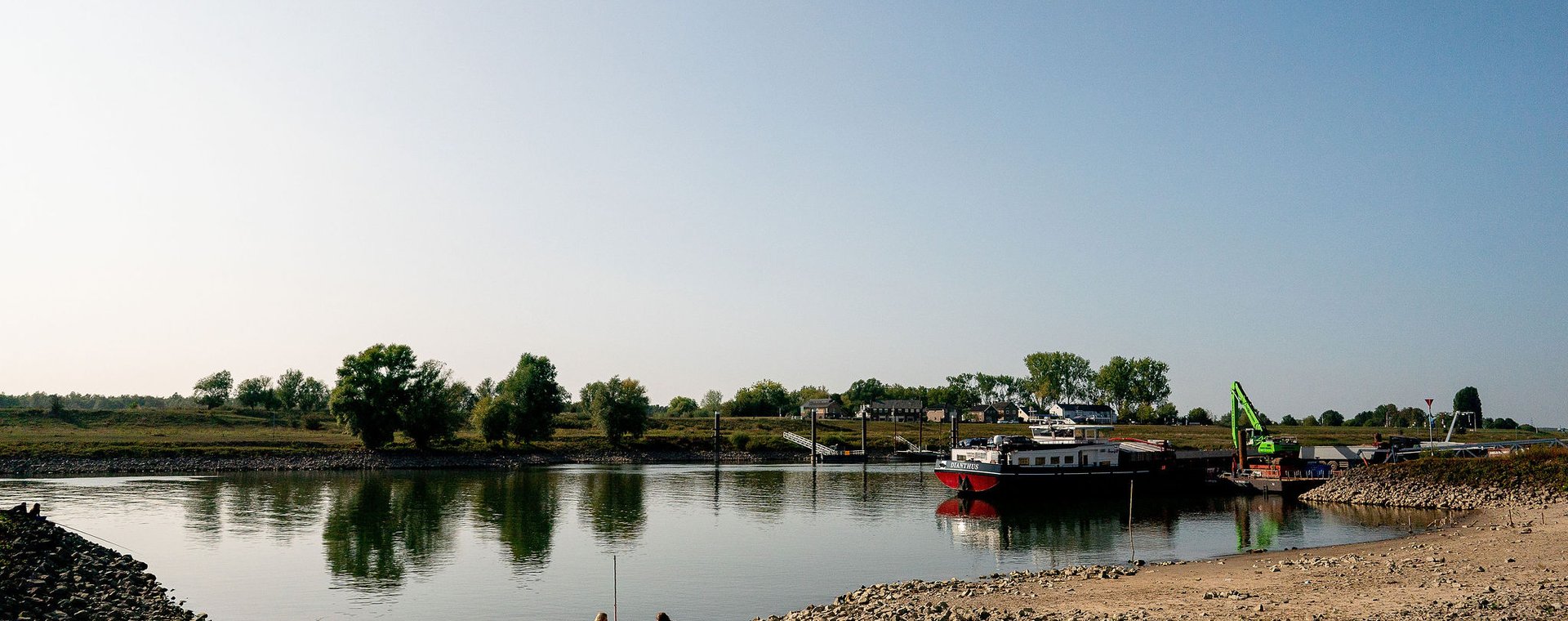
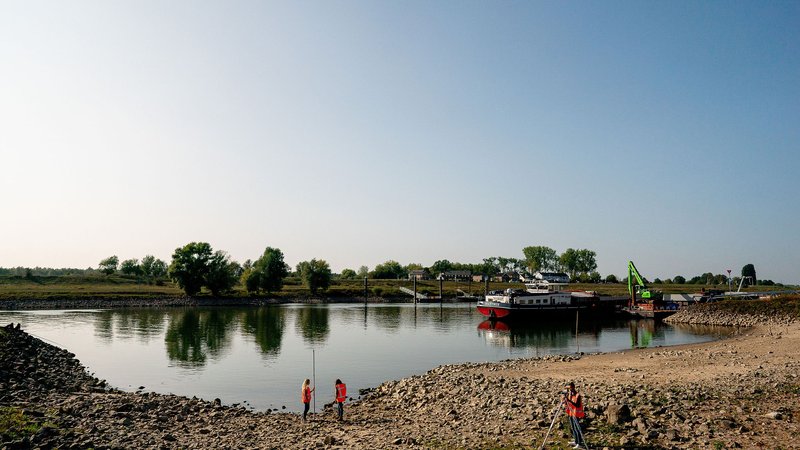
Studenten verrichten metingen langs een rivier

Open days

Applied research group collaborating with the Water Board Vallei and Veluwe that gives an impetus to the implementation of the Environment Act from water perspective, through training and research.

Water connects

The Environment and Planning Act can be regarded as a spatial transition task, and its implementation must be completed by 2029. The applied research group connects this transition task with the water transition task, which focuses on source-oriented, area-oriented, and actor-oriented water retention and purification. After all, water is an important conditioning factor for the quality of the living environment.

Why this applied research group?

Why this applied research group?

  • The Environment and Planning Act initiates a tremendously important change. This new act merges 26 laws, but more importantly, it forces governments and private partners to develop and protect the quality of the living environment sustainably. Together and integrally.
  • What is the water board doing? It faces the challenge of putting the importance of water on the agenda. This also affects students who want to work at the intersection of spatial design and water management.
  • The Applied Research Group on Sustainable Water in the Environment and Planning Act links practical questions about the water task in the Environment and Planning Act to theory, research, and education.
  • To achieve this, we collaborate transdisciplinarily: clients, lecturers, and students from various disciplines engage in participatory research. For, by, and with the environment.
  • We apply the knowledge and insights gained from research on the water transition to solution directions, work processes, cases, and policy analyses at the national government, provinces, municipalities, and water boards.
  • In this way, we contribute to the water task and, consequently, to the implementation of the Environment and Planning Act. For example, we contribute to the core instruments of the new act, such as Environmental Visions, Environmental Programmes, and Environmental Plans.
Mission & vision

Mission & vision

The applied research group aims to seize the opportunities the Environment and Planning Act offers for the water transition. In doing so, we also promote the larger goal of the act: to develop and protect the quality of the living environment integrally and sustainably.

How do we achieve this mission? Through research and education, we gather theoretical and practical knowledge and insights on the sustainable development and management of water systems as part of the Environment and Planning Act.

Research lines

Research lines

The Applied Research Group on Sustainable Water in the Environment and Planning Act addresses this central question: How can we make our water systems more sustainable (the water transition) within the context of the new Environment and Planning Act (the spatial transition)? This leads to two research lines.

  1. Research on the policy cycle: How can the water transition be integrated into the policy cycle of all governments? What contribution do the core instruments of the new act (such as Environmental Visions and Environmental Programmes) make to this? And how does this lead to area-specific customisation?
  2. Research on the water transition: How does the sustainable development of water systems become part of spatial initiatives? And how do we apply important principles in content (such as retaining and purifying rainwater) and process (such as co-creation)?
Projects

Projects

In our research projects, we use various methods such as literature reviews, ex post evaluations (where we assess the effectiveness of policies retrospectively), action research, and living labs. We integrate research questions as much as possible into the education at Van Hall Larenstein University of Applied Sciences (VHL) or other knowledge institutions.

Current Projects

Monitoring climate adaptation measures in Gelderland: We assist municipalities, through research and knowledge sharing, in monitoring the effectiveness of climate measures such as swales, infiltration sewers, water-retentive roads, and green facades. This is done on behalf of the province of Gelderland and with funding from the Delta Plan on Spatial Adaptation (DPRA). We share knowledge, for instance, through the Kennisportaal Klimaatadaptatie (Climate Adaptation Knowledge Portal).

Monitoring swales in Nijmegen: The applied research group supports the municipality of Nijmegen in researching and monitoring its green-blue structures, focusing on soil passages and swales. This complements the project ‘Monitoring climate adaptation measures in Gelderland’.

Status of the water transition: What is the nature and extent of the sustainability of our water system? We investigate this and link it to transition models such as the X-curve. This allows us to formulate concrete recommendations to facilitate the water transition.

Guide models for Water Board Vallei en Veluwe: For the sub-basin Northwest Veluwe, we are creating a guide model based on the development of the landscape. The project originates from the initiative of the province of Gelderland to give substance to the policy letter 'Water and Soil Steering'. It aligns with the aim of the Environment and Planning Act to develop the living environment sustainably.

Knowledge bank collaboration RIONED: In this project, we contribute to the Kennisbank Stedelijk Water (Urban Water Knowledge Bank) of RIONED. It mainly supports new policy officers in Urban Water to collaborate effectively and efficiently. Due to the Environment and Planning Act, cooperation with partners becomes even more important, as does an integral and participatory approach to streets and neighbourhoods.

Green Environment and Planning Act (GROW): The GROW platform highlights the results achieved by universities of applied sciences with their education and practical research for a sustainable living environment, as envisioned by the Environment and Planning Act. The universities share their network, knowledge, and experience, and work together towards joint research.

Water and Soil Steering in the Environment and Planning Act: The goal of this project is to provide municipalities and water boards with tools to implement the core instrument Environmental Programmes. The soil and water system is central to this.

Environmental plans based on water: This project investigates how municipal environmental plans for sandy and clay soils can optimally contribute to the sustainable development of the water system. The sandy soils are found in the Veluwe, and the clay soils in the lower areas around the Nederrijn, the IJssel, and the Randmeren.


Publications

Publications

The Applied Research Group on Sustainable Water in the Environment and Planning Act aims to share knowledge and insights about the sustainable development of our water management, especially within the context of the new Environment and Planning Act. The content of the publications arises from scientific practical research by students or data from our research group, ranging from physical-spatial to administrative-organisational information. The objective is always to answer the questions of public and private parties. Therefore, we consciously choose to publish in professional literature such as Water Governance and Land+Water, or to digitally distribute our reports directly to clients.

Highlighted Publications

The Environment and Planning Act as a Carrier of the Spatial Water Transition?: This article in the journal Water Governance is written by lector Paul van Eijk. It focuses on the broad transition of water management as part of the Environment and Planning Act. For the applied research group, this transition is a research environment. The goals are shifting: from discharging and purifying water to retaining and maintaining its cleanliness. The scope of water management is also changing: from function-oriented to area-oriented. Similarly, the approach is shifting: from self-interest and organisation to co-creation and participation.

(A)quadruple helix. On the Sustainable Development of Water Systems: Paul van Eijk delivered this address when he assumed his position as lector in 2015. The relevance of the water transition is central to this, both for society and for practical scientific research. In 2019, the Applied Research Group on Sustainable Water in the Environment and Planning Act added the spatial transition to this focus.

Online library

All publications of the applied research group can be found on Greeni, the online library for green higher professional education.

Knowledge network

Knowledge network

VHL professionals

The knowledge network of the Applied Research Group consists of five VHL professionals, each with their own expertise. The composition of the knowledge network varies per project:

  • Paul van Eijk - Lector and environmental planner
  • Peter Groenhuijzen - Lecturer-researcher and civil engineer
  • Nicky del Grosso - Post-doc and environmental lawyer
  • Gerrita van Spijker - Project manager
  • Aukje Verheijen - Research assistant

Networks

The applied research group is also part of the Applied Research Centre (ARC) of Van Hall Larenstein University of Applied Sciences in Velp, where six colleague lectors exchange knowledge and skills. Outside the university, the applied research group collaborates within the Delta Platform network (with lectors from eleven universities of applied sciences) and in GROW (with eight lectors from various universities of applied sciences).

Knowledge partners

  • Wageningen University & Research
  • University of Groningen
  • Provinces, municipalities, and water boards
  • Climate Adaptation Services CAS
  • Consultancies such as Sarah Ros Bestuursadvies

Programmes

Students from multiple programmes work at the applied research group on their internships, research, or graduation assignments:

Want to know more?

Want to know more?

Want to learn more about the Applied Research Group on Sustainable Water in the Environment and Planning Act? Interested in collaboration opportunities? Or looking for an internship or graduation project? Call or email us at:

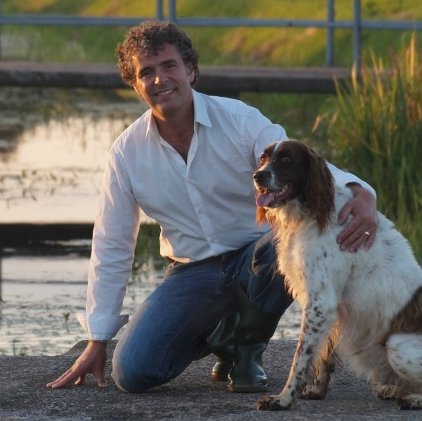
Dr. Paul van Eijk
Professor Sustainable Water Systems in the Environment and Planning Act

Highlighted projects

In our research projects, we use various methods. We integrate research questions as much as possible into the education at Van Hall Larenstein University of Applied Sciences (VHL) or other knowledge institutions.