Van Hall Larenstein University of applied sciences

Sustainable Soil Management

Sustainable Soil Management develops knowledge and expertise on sustainable soil management and its ecosystem services.

Open days

  • Online Open Day

    19 March

  • Online Open Day

    4 June

Sustainable Soil Management

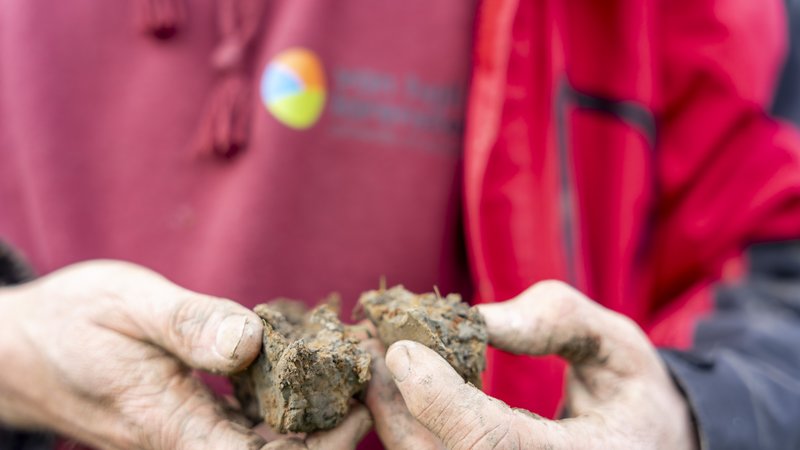
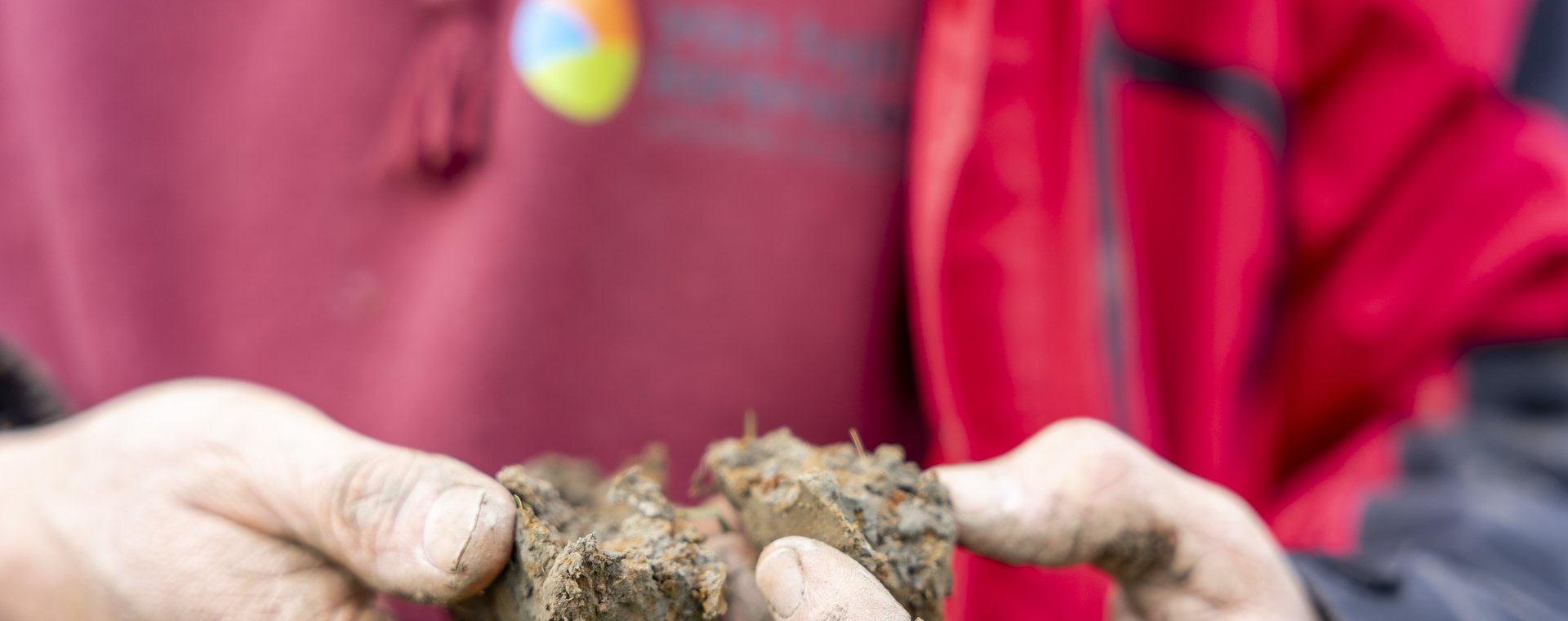
Onderzoeker laat een bodemmonster zien

Open days

Sustainable Soil Management develops knowledge and expertise on sustainable soil management and its ecosystem services.

Keeping soils vital for nature and society

Our society faces major challenges regarding climate, food security and safety, biodiversity, and water quality. Healthy soils are essential for achieving these goals. Soils provide us with food, support plant and animal species, purify water, sequester CO2, and serve as a foundation for infrastructure and housing. The Applied Research Group Sustainable Soil Management develops knowledge and innovations, thereby contributing to keeping soils vital.

Why this applied research group?

Why this applied research group?

  • With our research, we work on practical approaches to solving soil problems and enhancing soil vitality.
  • We connect education, research, businesses, and governments. Together, we strive for sustainable soil management in the Netherlands and beyond, for now and in the future.
  • In the Soil Learning and Knowledge Centre, for example, multiple parties in Northern Netherlands conduct practice-oriented research into sustainably managed soils in relation to agriculture, water management, and biodiversity.
  • The research conducted by the Applied Research Group Sustainable Soil Management ranges from practical to laboratory settings and from plot to regional levels. For instance, we have a mesocosm outdoor lab.
  • In this outdoor system, we can compare different soil types and discover the effects of management practices, crops, additives, and combinations thereof.
  • We also conduct specialised research, such as on the quality of organic matter and soil microbiology.
Mission & vision

Mission & vision

The Applied Research Group Sustainable Soil Management aims to make a significant contribution to improving sustainable soil management at plot, farm, and regional levels. To achieve this, we initiate, coordinate, and carry out practice-oriented research, education, and training. In this way, we develop knowledge and expertise on sustainable soil management and the associated ecosystem services, such as agricultural production, carbon sequestration and climate regulation, water management and quality, nutrient recycling, biodiversity, and soil biology. This is achieved through the collaboration of the four O’s: education, research, government, and businesses.

Research lines

Research lines

For the practice-oriented and applied research, the knowledge questions, and the sustainable innovations that the Applied Research Group works on, four research lines form the common thread:

  • Soil Ecology: How do the complex interactions between (micro)organisms and physico-chemical soil conditions occur?
  • Soil and Climate: Which processes reduce the emission of climate gases? And how can the soil be used to counter sea-level rise and improve water retention?
  • Regenerative Agriculture: With which (production) methods and management practices can we strengthen the soil as a natural resource instead of depleting it?
  • Salinisation: How can soil management make the agricultural system resistant to salinisation and improve the availability of fresh water?
Projects

Projects

All projects of the Applied Research Group Sustainable Soil Management aim to keep soils healthy for their various functions and users, both in the Netherlands and beyond its borders. For now and in the future.

Current projects

Soil Ecology Research Line

  • Soil and Human Health: A healthy soil ensures healthy crops and thus people who eat healthier food. We research the microorganisms in agricultural plots and their impact on the crops growing on them. This is done in collaboration with an interdisciplinary consortium of knowledge institutions, farmers, consumers, and companies.

Soil and Climate Research Line

  • Care-Peat: When peatlands are drained, the carbon stored in them is released into the atmosphere as greenhouse gases. Therefore, it is important to keep peatlands wet. This project develops innovative and effective restoration and carbon measurement techniques.
  • Circular Land Management: Agriculture has a great need for organic soil improvers to reduce drought sensitivity and enhance carbon stocks. We investigate the opportunities and challenges of processing organic residual streams locally into soil improvers. bodemverbeteraars.
  • Climate-Resilient Stream Landscapes: The Netherlands aims to be climate-resilient by 2050, which presents a major challenge, especially for stream landscapes with their stream valleys and high sandy soils. This project examines what this transition means for such landscapes.
  • Carbon as an Opportunity: Sustainably managed agricultural soils are more fertile and better able to withstand climate change. They also ensure cleaner surface and groundwater, greater biodiversity, and better carbon sequestration. With 'Carbon as an Opportunity,' we work on practical methods for measuring and monitoring organic matter and nitrogen in the soil
  • Soil Learning and Knowledge Centre: Together with the Soil Knowledge Centre, we are establishing a Soil Learning and Knowledge Centre at the sustainable meeting place Biosintrum in Ooststellingwerf. Here, research facilities will be available, and we will develop and share knowledge and awareness about healthy soils.

Regenerative Agriculture Research Line

  • Bokashi Green Stations: Increasingly, dairy farmers want to process clippings from ditches and verges on their farms into compost or 'bokashi' (in Japanese). We investigate the effect of bokashi on production and soil quality.
  • Circular Fertilisers: Due to the large livestock population in our country and increasingly stringent legislation, we have had a significant manure surplus for decades. Circular fertilisers and organic substances can be a solution. But how do we encourage their use? We are conducting research on this.
  • Promising Crops: The goal of this project is to develop knowledge, experience, and business models for oil-bearing, fibre-rich, and protein-rich crops. These 'promising crops' are increasingly attracting the interest of farmers because they contribute to better soil health and more sustainable agriculture.
  • Regenerative Open Cultivation Systems: A healthy soil yields healthy crops, which in turn promote the health of humans and animals. This is the principle of regenerative agriculture. We focus on the effects of this type of agriculture and share our knowledge with the field.
  • Straw-Rich Stable Manure: Solid manure must currently be worked into the ground. For potato growers, this is a risk as it increases the chances of diseases and pests. Therefore, we conduct comparative research on whether or not to incorporate straw-rich stable manure and its effects on soil, crops, biodiversity, and water.

Salinisation Research Line

  • Farmers Measure Water: Farmers and water boards work together to gain more insight into the water and soil system. Van Hall Larenstein University of Applied Sciences takes measurements and helps farmers with their knowledge questions and measures to mitigate the effects of salinisation and peat oxidation.
  • PreciSIAlandbouw: Precision agriculture is a farm management concept that uses technology and knowledge to maximise economic, ecological, and social goals. We research and validate the applications and business models of this concept for farmers.
Publications

Publications

The Applied Research Group shares knowledge on new developments and practical approaches related to soil, (soil) ecosystem services, and socio-economic aspects through publications. We do this with and for the professional field and education. Final products include student reports, brochures, flyers, articles in trade journals and on websites, and scientific publications. You can also find our work on the online Soil Knowledge Centre.

  1. Checklists for Soil Compaction: A compacted soil faces various problems, such as poor root penetration, reduced water infiltration, and fewer nutrients. These checklists, from the Applied Research Group Sustainable Soil Management, LTO, and Cumela, highlight the issue of soil compaction and help the field make the right choices.
  2. Healthy Soil, Less Work: What soil types can you find in our country? And what can you grow on each type? In the magazine Landleven, lector Emiel Elferink provides a lesson in soil science. He explains to his readers how they can better understand and manage their land below ground as well.

All publications from the Applied Research Group can be found on Greeni, the online library for green higher professional education.

Knowledge network

Knowledge network

In 2016, the Applied Research Group emerged from theSoil Knowledge Centre: a collaboration of fifteen organisations that develop knowledge and expertise about sustainable soils and their ecosystem services. The partners aim to contribute to maintaining and creating healthy soils. This offers opportunities for the agricultural sector but also requires new scientific and practice-oriented research and educational development at both higher professional education (HBO) and secondary vocational education (MBO) levels.

We join forces with these knowledge partners:


The Applied Research Group collaborates intensively with various programmes at VHL, where the subject of 'soil' is a component. Students do internships or (graduation) research, and lecturer-researchers broaden their knowledge through research. For example:

  • Innovatieve Plantenteelt
  • Dier- en Veehouderij
  • Management van de Leefomgeving
  • Milieukunde
  • Bedrijfskunde en Agribusiness
  • Biotechnologie
Want to know more?

Want to know more?

Curious about the Applied Research Group Sustainable Soil Management? Interested in collaboration opportunities, an internship, or a graduation project? Call or email:

Dr. Emiel Elferink
Professor Sustainable Soil Management

E-mail: emiel.elferink@hvhl.nl
Phone: +31 6 14 97 84 71

Featured projects

There is a significant (research) challenge to make soil management both economically and ecologically “healthy” again. This requires an integrated approach and a collaboration between educational/knowledge institutions, businesses, and governments.