Sustainable Equestrianism
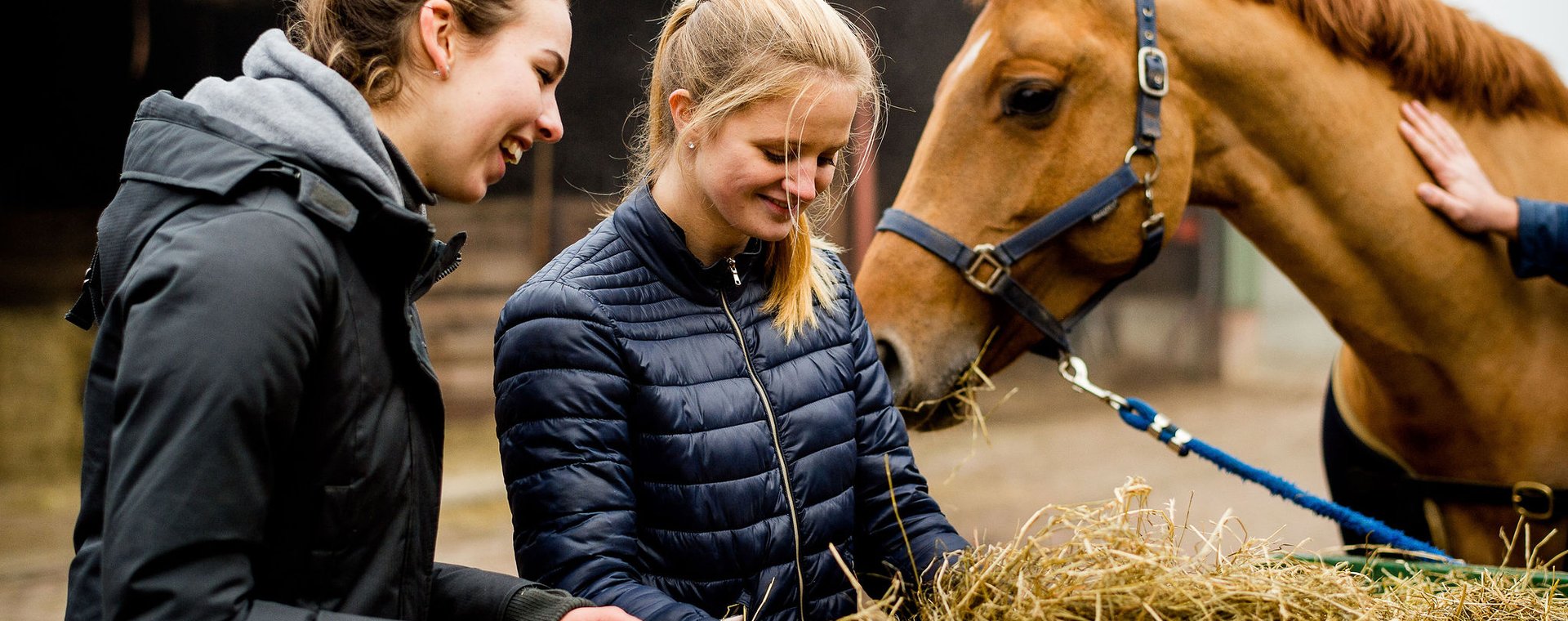
The applied research group Sustainable Equestrianism helps to improve our understanding of the transition to a sustainable and future-proof equine sector.
Open days
-
Online Open Day
4 June



The applied research group Sustainable Equestrianism helps to improve our understanding of the transition to a sustainable and future-proof equine sector.
Online Open Day
4 June
Online Open Day
4 June
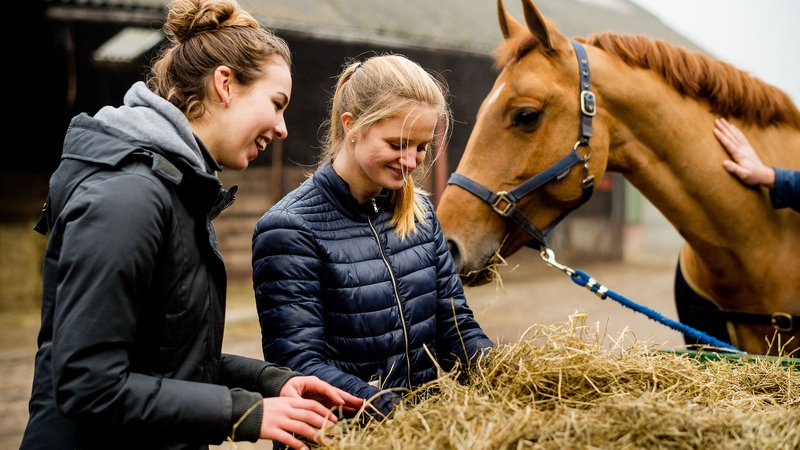
The applied research group Sustainable Equestrianism helps to improve our understanding of the transition to a sustainable and future-proof equine sector.
The applied research group aims to gain insight into the transition towards a future-proof equine sector, focusing on the horse, human, nature, and environment. We examine the various aspects of behavioural change: knowledge and skills, motivation, attitudes, thought patterns, physical conditions, and social context. Three pillars encompass sustainable interaction with horses. We emphasise the centuries-old bond between humans and horses and what the sector can contribute to the national transition towards a green, sustainable living environment.
Our vision is to lead the equine sector in harmonious interaction between animals, humans, and nature. The applied research group Sustainable Horse Husbandry and Equestrian Sports bridges the gap between science and practice. We develop practical knowledge through scientific research, in collaboration with national and international partners from various sectors, and then work on appropriate implementation pathways to ensure that existing and future knowledge is effectively utilised.
Eyetracking provides an in-depth understanding of horse-rider interactions in equestrian sports, both for performance assessment and horse welfare. It reveals the focus of judges, informs judge training, and improves assessment transparency. This project, in collaboration with Tobii and associate professor Dr. Peter Reuter, aims to investigate the relationship between live visual attention patterns, assigned dressage scores, verbal comments made by a dressage judge, and the kinematic movement data of horse and rider obtained during competitions. verkregen tijdens wedstrijden.
The Equine Welfare Certificate (PWB) developed by the applied research group in collaboration with the Foundation for Riding Competence for Riders and Drivers (SRR) is designed to impart basic skills and knowledge about horse handling to equine enthusiasts, with a focus on welfare. The initiative aims to encourage the practical application of this knowledge. The PWB provides an opportunity for equine enthusiasts to demonstrate their basic knowledge.
Stip op de Horizon: Paard, Mens en Natuur in Verbinding (2023)
More about the applied research group Sustainable Horse Husbandry and the focus on developing transition pathways towards a sustainable equine sector is described in the inaugural lecture. Topics such as biodiversity, nature inclusion, and climate adaptation on equine farms are explored. Read the full inaugural lecture.
All publications of the applied research group can be found on Greeni, the online library for green higher education.
A fresh perspective, new ideas, but also a critical note; all essential to continue developing and timely respond to recent developments.
The knowledge network includes researcher-lecturers from various programmes and other applied research groups and researchers with an affinity and interest in the equine sector. The members of the knowledge network are employed by VHL or by other research or educational institutions within or outside the Netherlands. They are often, but not necessarily, directly involved in the research activities of the applied research group, thereby directly contributing to its direction and substantive focus.
Lijst met kennispartners
Academic partners
SMEs
Social organisations
Public and government institutions
Interested in these themes? Get in touch.
Contactinfo
Inga Wolffram
Professor Sustainable Horse Husbandry and Equestrian Sports
E-mail: inga.wolframm@hvhl.nl
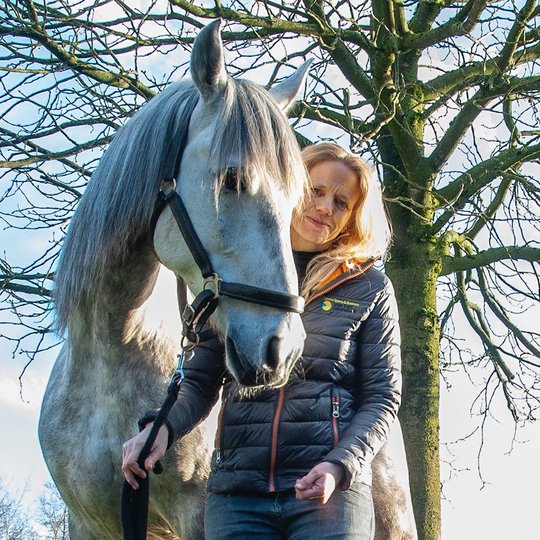
In addition to her scientific publications, she wrote several books and regularly lectures at (inter)national conferences and meetings. Besides her work as a lecturer at the University of Applied Sciences, Inga is attached as an external researcher to the Faculty of Veterinary Medicine, Utrecht University.