Van Hall Larenstein University of applied sciences

Safety in the Food Chain

Research line within the applied research group Sustainable Dairy & Food Processing.

Open days

  • Online Open Day

    19 March

  • Online Open Day

    4 June

Safety in the Food Chain

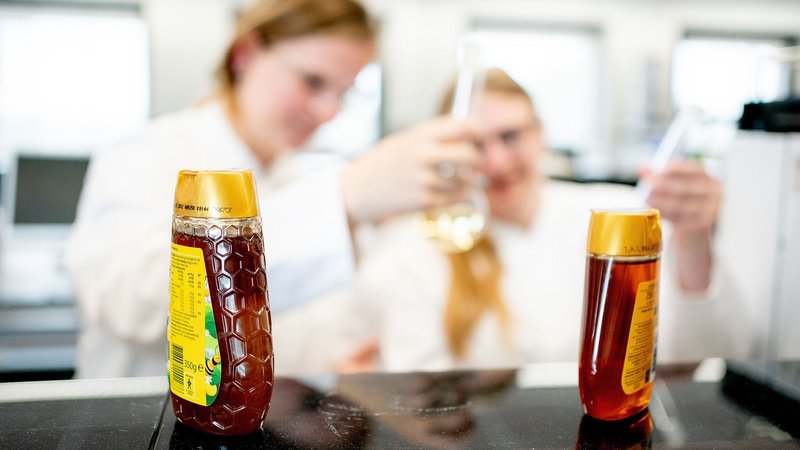
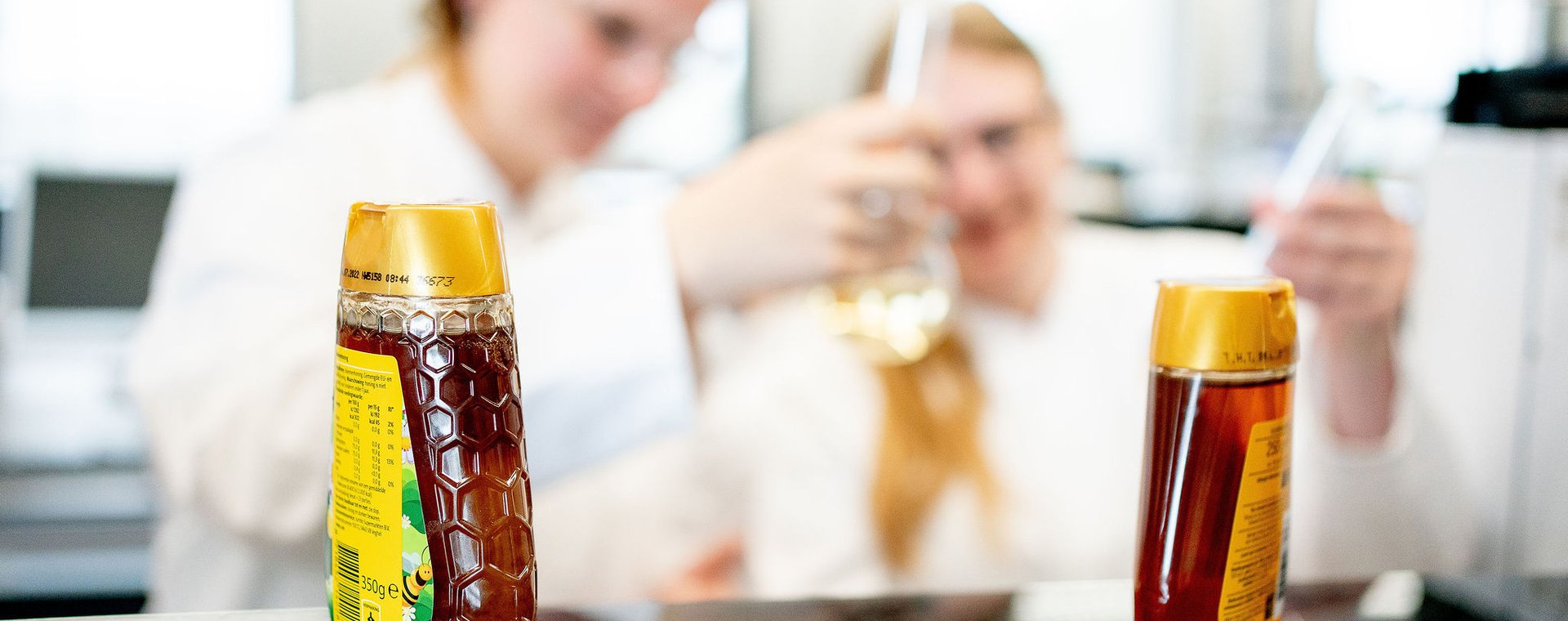
Onderzoekers bekijken honing monsters in het lab

Open days

Research line within the applied research group Sustainable Dairy & Food Processing.

For fair and safe food

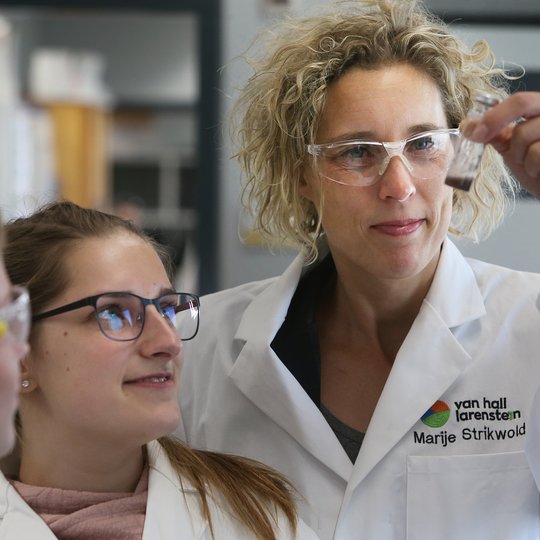
The associate applied research group Safety in the Food Chain focuses on ensuring food safety from farm to fork. Here, we study the fate of substances in the (circular) food chain, identify potential health risks, and establish risk mitigation strategies. Additionally, product integrity (food fraud) is a major focus, and we use advanced techniques for kinetics and toxicity testing. This multidisciplinary research line contributes to a sustainable future for people and the environment, in collaboration with knowledge institutes, companies, and students.

Why this associate applied research group?

Why this associate applied research group?

  • Applied research into food fraud
  • Expertise in food safety and quality
  • Close collaboration with the agro and food industry
  • Applied research with a direct impact on practice
Projects

Projects

  • BioDiverseMilk: Herb-rich grasslands can contribute to biodiversity and, when properly applied, have positive effects on soil quality, animal health, and emission reduction. The BioDiverseMilk project investigates the effect of herb-rich grassland on milk composition and methane and nitrogen emissions. The outcomes provide dairy farmers with tools to apply functional herbs effectively on their farms and to economically valorise their use.
  • Design of a ruminant digestion model: The effect of animal feed on the composition of foodstuffs, including milk, is largely determined by the processes occurring in the fore-stomach and small intestine of the cow, which can be studied in animal experiments. As an alternative to using animals, this project explores the possibilities for an in vitro digestion model for cows.
  • Cleaning possibilities for sesame seeds contaminated with ethylene oxide and/or 2-chloroethanol: In 2020, batches of sesame seeds exceeded the European Union's Maximum Residue Limit (MRL) for the pesticide ethylene oxide. Through a theoretical and laboratory study, the cleaning possibilities of contaminated sesame seeds were investigated, and the international standards for the use of ethylene oxide as a pesticide were explained to the client.
  • FARM-LIFE - refarming the future: To encourage the transition from conventional monocultures to climate-resilient forestry, knowledge and tools are exchanged between stakeholders. Additionally, research is conducted on the impact of climate-resilient forestry on biodiversity, soil quality, and, where this associate applied research group contributes, the nutritional value and nutrient composition of products derived from agroforestry systems.
  • HortiTechIndia: Through the Webinar Food Safety ‘From harvest to plate’, knowledge about substances in the food chain was shared with the horticultural sector in India. The webinar can be viewed on YouTube.
  • Determining the origin of PAHs in herbs: In some herbs, polycyclic aromatic hydrocarbons (PAHs) are found above the EU standard for dried herbs. The origin of PAHs in dried herbs was investigated, and (content-reducing) measures and advice were formulated to help companies active in the herb sector continue to deliver products that meet the applicable standards.
  • Development of physiologically based pharmacokinetic models: The prediction of the toxicity of substances, including pesticides, additives, chemicals, and (veterinary) medicines, traditionally involves animal testing. As an alternative, in vitro and in silico models are being developed to describe the absorption, distribution, metabolism, and excretion (ADME) of substances in human and animal bodies. By combining these models with in vitro toxicity tests, the toxicity of substances can be predicted without animal testing.
Publications

Publications

Online library

All publications of the associate applied research group Safety in the Food Chain can be found on Greeni, the online library of green higher education.

Want to know more?

Want to know more?

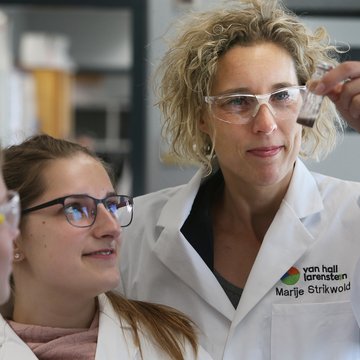
Marije Strikwold
Associate professor Safety in the Food Chain

Email: marije.strikwold@hvhl.nl
Phone: +316 222 183 04