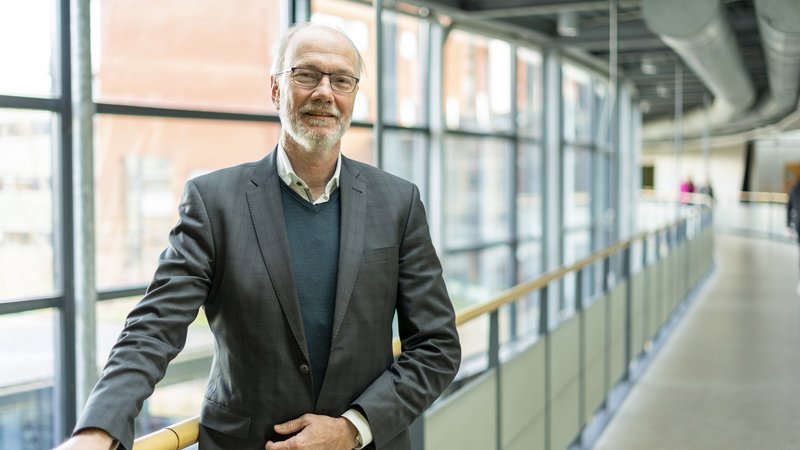
Peter de Jong
Professor Sustainable Dairy and Food Processing at Hall Larenstein University of Applied Science.
Open days
-
Online Open Day
4 June



Professor Sustainable Dairy and Food Processing at Hall Larenstein University of Applied Science.
Online Open Day
4 June
Online Open Day
4 June
Professor Sustainable Dairy and Food Processing at Hall Larenstein University of Applied Science.
Peter de Jong, a passionate researcher and expert in process technology, strongly believes in the potential of innovation to improve global food security. After obtaining his PhD from Delft University of Technology in 1996 and undergoing various training programs, he began his career at FrieslandCampina and later at NIZO food research, where he focused on process optimization for food companies.
In 2013, he became the program director at the Institute for Sustainable Process Technology, where he developed new technologies within large consortia of companies. In 2014, he was appointed as the lector of Dairy Process Technology at VHL, which later evolved into Sustainable Dairy and Food Processing. At the same time, he was appointed principal scientist of Food Processing at NIZO, and in 2021 he became the program director of the Fascinating program, focused on a sustainable, circular food chain in Groningen. Peter is dedicated to fair comparisons between animal and plant-based foods, developing projects for the dairy industry and processing crops into proteins, and promoting extensive processes.
Peter believes that the future of food production depends on optimizing and making food chains more sustainable, focusing on fresh, mildly processed food with high nutrient value. This means that future generations will consume more with a greater emphasis on nutritional value rather than calories. Peter advocates for an accelerated food transition by investing in hybrid products, utilizing both animal and plant sources. He sees this as crucial for achieving food security for a growing global population while simultaneously reducing the ecological impact of food production.
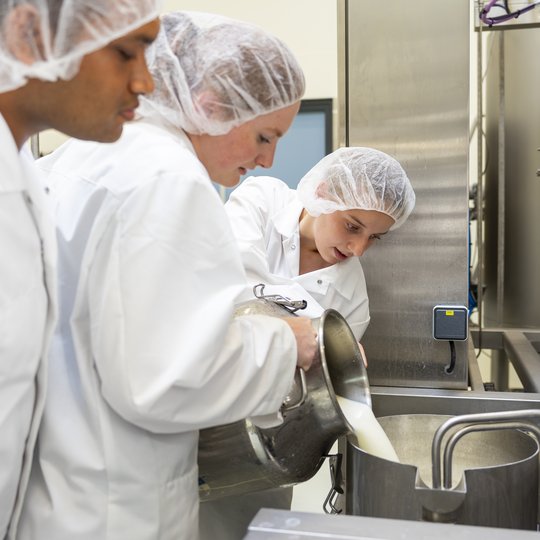
The Applied research group Sustainable Dairy & Food Processing aims to develop new, sustainable food processes with attention to climate adaptation and mitigation. Our focus encompasses the entire chain, from raw material to consumer, with an emphasis on reducing fossil energy and greenhouse gas emissions. When developing processes, the quality of nutrients, taste, sustainability such as water and energy, and cost price are the main considerations.