Sustainable Dairy and Food Processing
Strengthening sustainable food and dairy expertise within education and research in the Netherlands: quality, efficiency and sustainability.
Open days
-
Online Open Day
4 June



Strengthening sustainable food and dairy expertise within education and research in the Netherlands: quality, efficiency and sustainability.
Online Open Day
4 June
Online Open Day
4 June
Strengthening sustainable food and dairy expertise within education and research in the Netherlands: quality, efficiency and sustainability.
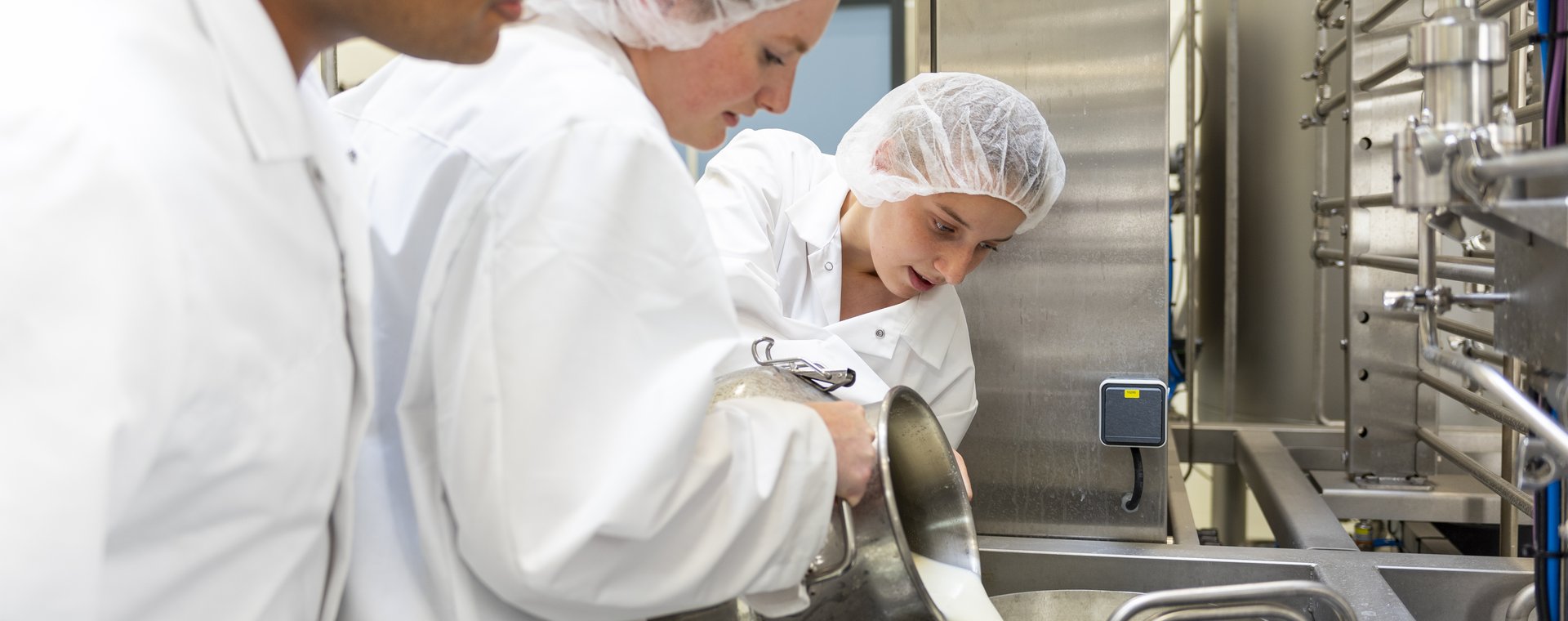
The applied research group Sustainable Dairy and Food Processing aims to develop new, sustainable food processes with attention to climate adaptation and mitigation. Our focus encompasses the entire chain, from raw material to consumer, emphasising the reduction of fossil energy and greenhouse gas emissions. When developing processes, we prioritise nutrient quality, taste, sustainability aspects such as water and energy use, and cost.
The applied research group aims to develop innovative process technologies that promote the food transition. The focus is on optimising quality and reducing emissions and costs. In this way, we contribute to food security in 2050 and beyond. We strive for the development and implementation of advanced technologies that not only increase the efficiency of food production but also contribute to consumer health. The dairy sector serves as an example for the entire food chain.
The projects within the applied research group are linked to various themes such as the protein transition, quantifying and comparing sustainability, development of mild process technology, sustainable protein chains, and the application of computer models and AI.
The applied research group highly values sharing research results with social organisations and partners in the food chain. Below is an overview of the main publications of scientific articles, media publications, and white papers.
Polman, J., Koerten, K. van, Tromp, R.H., Jong, P. de, Critical review on an experimental design to measure and model milk fouling in heating equipment. Journal of Food Engineering 350 (2023) 111402 - Fouling is a significant cost factor in the food industry. Joyce Polman (researcher-lecturer at VHL) has indicated how fouling can be investigated and reduced.
Jong, P. de, Woudstra, F., Wijk, A.N. van, Sustainability Evaluation of plant-based beverages and semi-skimmed milk incorporating nutrients, market prices and environmental cost. Sustainability 16 (2024) 1919 https://doi.org/10.3390/su16051919 - The media and professional literature provide many overviews of the sustainability of different food products. This article presents a method that links sustainability to nutrients, protein quality, and market price.
All publications of the applied research group can be found on Greeni, the online library of the green universities of applied sciences.
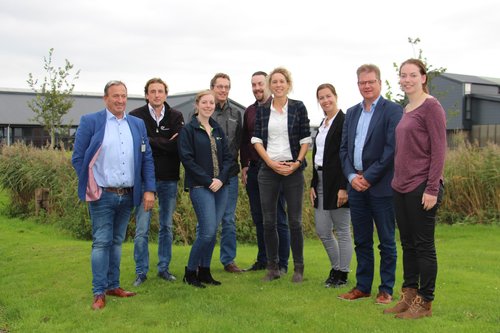
The knowledge network currently consists of experts from the ARC and lecturers from the education department. At this moment, they are:
The associate applied research group Safety in the Food Chain focuses on ensuring food safety from farm to fork. Here, we investigate the fate of substances in the (circular) food chain, identify potential health risks, and establish risk mitigation strategies. Additionally, product integrity (food fraud) is a major focus, and we use advanced techniques for kinetic and toxicity testing. This multidisciplinary research line contributes to a sustainable future for people and the environment, in collaboration with knowledge institutes, businesses, and students.
Read more about the associate applied research group Safety in the Food Chain.
Would you like to know more about the applied research group Sustainable Food & Dairy Processing? Curious about collaboration opportunities? Or interested in an internship or graduation project?
Dr. Peter de Jong
Professor of Sustainable Food & Dairy Processing
Email: peter.dejong@hvhl.nl
The projects within the research group are linked to various themes such as the protein transition, quantifying and comparing sustainability, development of mild process technology, sustainable protein chains, and the application of computer models and AI.
The BioDiverseMilk project collects and disseminates existing and new knowledge about herbs and the utilisation of bioactive components.
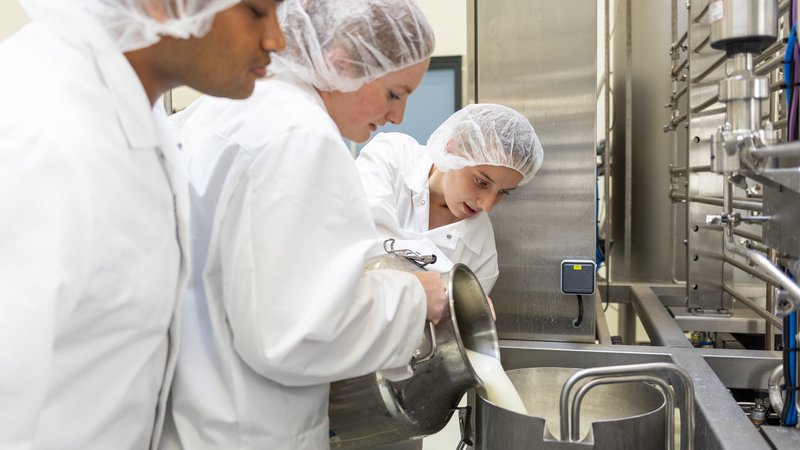
Process optimisation to improve the nutritional value of milk powder is a research project of the Dairy Process Technology research group.
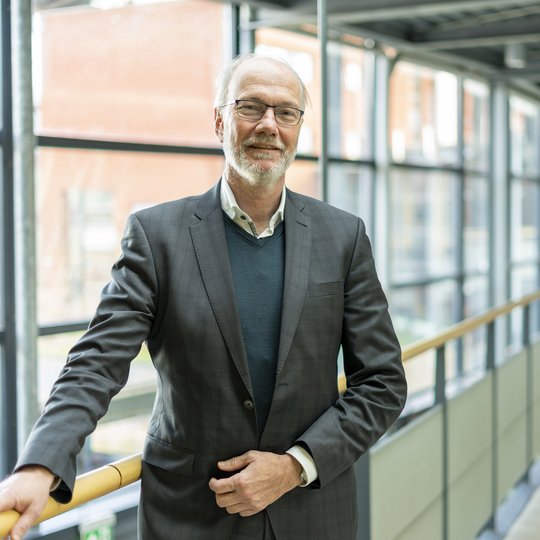
Peter believes that the future of food production depends on optimising and making food chains more sustainable, with a focus on fresh, minimally processed food with high nutrient value. This means that future generations will consume more with a greater emphasis on nutritional value rather than calories.