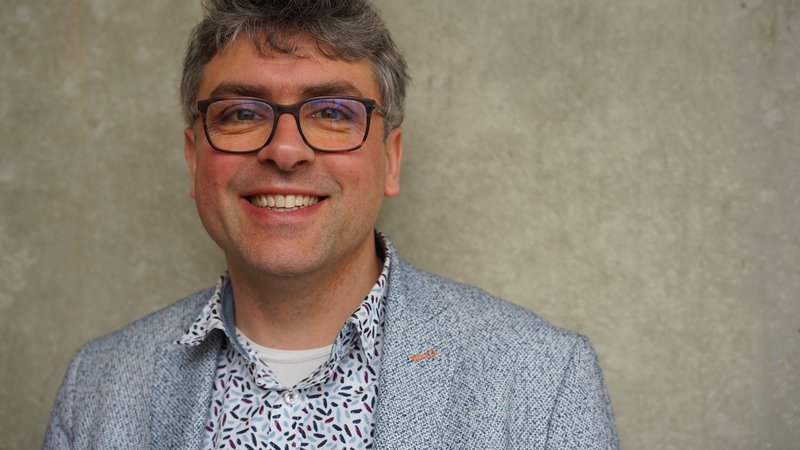
Martijn van der Heide
Professor of Biodiversity in Rural Areas at Van Hall Larenstein University of Applied Science.
Open days
-
Online Open Day
4 June



Professor of Biodiversity in Rural Areas at Van Hall Larenstein University of Applied Science.
Online Open Day
4 June
Online Open Day
4 June
Professor of Biodiversity in Rural Areas at Van Hall Larenstein University of Applied Science.
Martijn van der Heide (1973) grew up in the rural area of Utrecht and has always had a strong interest in the interaction between agriculture, nature, and the economy. He sees societal challenges such as biodiversity loss and the sustainability of the agricultural sector as issues that require an integrated approach.
Martijn studied agricultural economics at Wageningen University and obtained his PhD in 2005 from Vrije Universiteit Amsterdam with an ecological-economic analysis of nature policy. His specializations are nature valuation, policy evaluations, landscape and environmental economics, and spatial explorations of rural areas.
After his PhD, he worked at Wageningen Economic Research and was a part-time professor at the applied research group ‘Integrated Nature and Landscape Management’ at HVHL in Velp from 2010 to 2014. In 2018, he moved to the Ministry of Agriculture, Nature and Food Quality and has been working at DG RTLG (Directorate-General for Rural Area Transition) since 2022. Since 2020, he has been a special professor and holder of the Mansholt Chair ‘Nature-Inclusive Rural Development’ at the University of Groningen.
Within the applied research group ‘Biodiversity in Rural Areas,’ Martijn focuses on four core areas: business models for nature-inclusive agriculture, the benefits of a biodiverse rural area, innovative ways of measurement and monitoring, and biodiversity education in both education and agricultural practice. This integrated approach strengthens the economic, ecological, and educational aspects of biodiversity in rural areas. By researching the ecological and socio-economic effects of a biodiverse rural area, the applied research group contributes to a sustainable and future-proof design of the countryside.
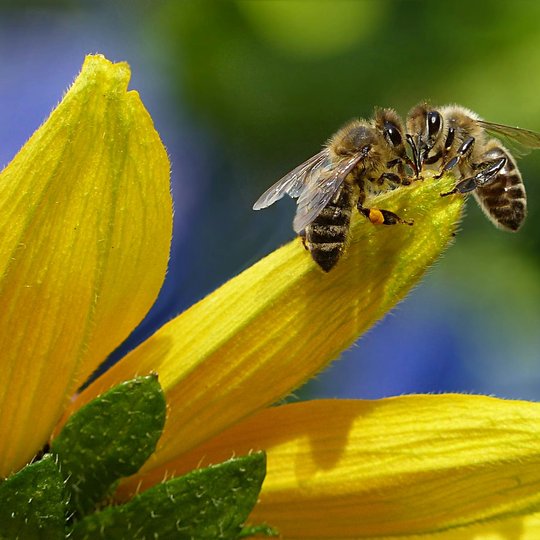
The applied research group ‘Biodiversity in Rural Areas’ focuses on current and future developments regarding nature, landscape, and ecosystem services, particularly in the agricultural cultural landscape. These developments are considered from both ecological and socio-economic perspectives. In education, research, and practice, we aim to bridge the gap between a biodiverse countryside, an attractive living environment, and a sustainable agriculture.