Van Hall Larenstein University of applied sciences

Biodiversity in Rural Areas

Research into a broader approach to increase biodiversity, with meadow birds and bees, in rural areas.

Open days

  • Online Open Day

    19 March

  • Online Open Day

    4 June

Biodiversity in Rural Areas

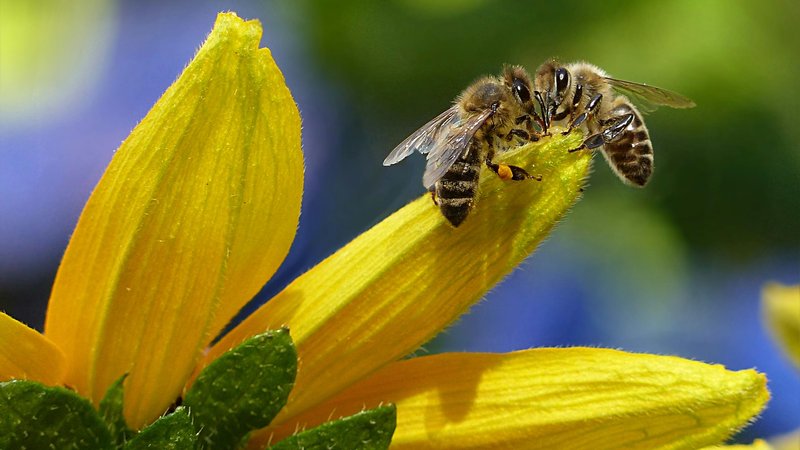
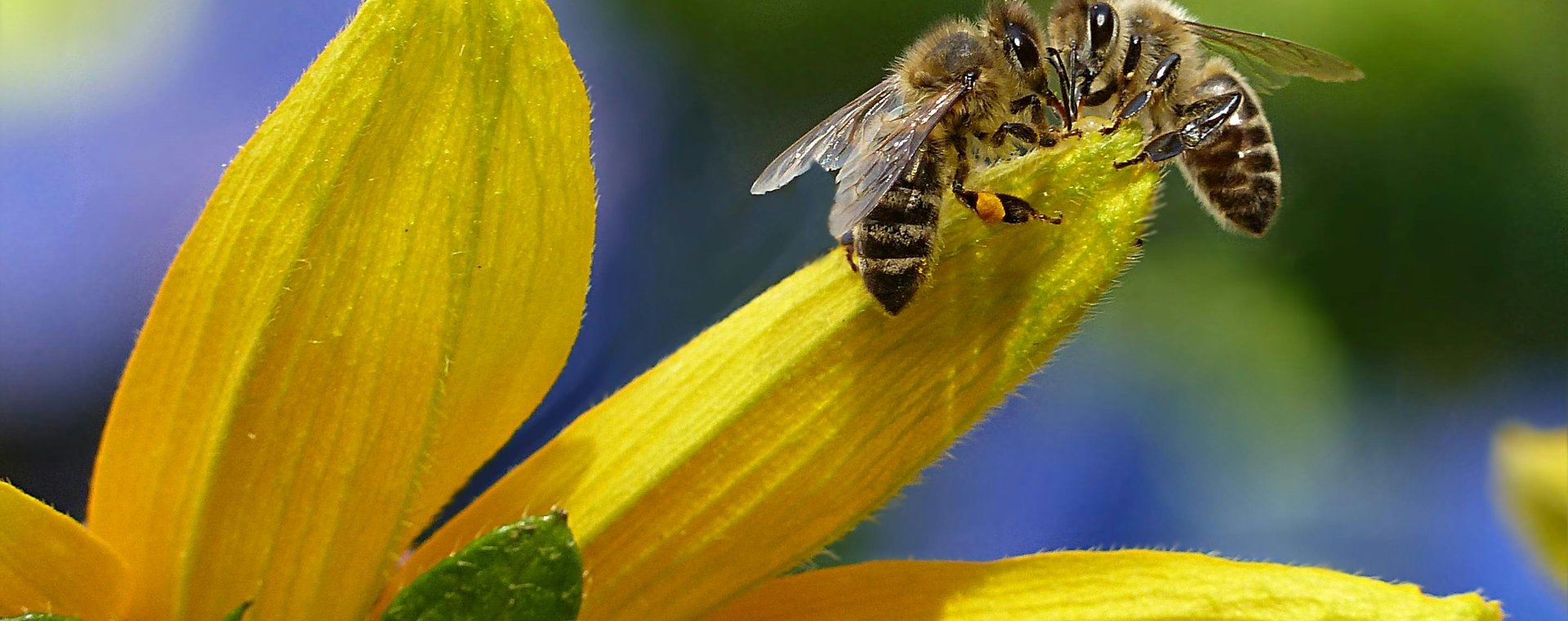
Bijen halen nectar uit een bloem

Open days

Research into a broader approach to increase biodiversity, with meadow birds and bees, in rural areas.

Connecting agriculture and nature for the future

The applied research group ‘Biodiversity in Rural Areas’ focuses on current and future developments regarding nature, landscape, and ecosystem services, particularly in the agricultural cultural landscape. These developments are considered from both ecological and socio-economic perspectives. In education, research, and practice, we aim to bridge the gap between a biodiverse countryside, an attractive living environment, and sustainable agriculture.

Why this applied research group?

Why this applied research group?

  • Connecting agriculture and nature, which have grown apart.
  • Contributes to a biodiverse rural area and addresses various societal challenges.
  • Highlights ecological as well as socio-economic benefits, demonstrating that biodiversity pays off.
  • Maps out effective, affordable, and widely supported measures to enhance (agro)biodiversity.
  • The applied research group aims to structurally integrate the importance of biodiversity into agricultural education.
  • Biodiversity does not adhere to national borders, and therefore, this applied research group looks beyond the Netherlands.
Mission & vision

Mission & vision

Nature and the rural area are inextricably linked. Today, however, they seem like two separate worlds. Nature is protected in specially designated areas, separated from the agricultural landscape. The applied research group aims to intertwine these worlds. We want to create a biodiverse countryside, improve the quality of the rural living environment, and contribute to a robust and sustainable agricultural sector.

Research lines

Research lines

The applied research group is still being established, so there are no fully developed, aligned, and widely supported research lines yet. What follows are the initial building blocks for potential research lines:

  1. Developing and applying innovative biodiversity monitoring methods to track and evaluate the effects of measures.
  2. Strengthening and securing biodiversity education, both in (VHL) education and in practice.
  3. Embedding biodiversity in nature-inclusive business models as a prerequisite for a biodiverse rural area.
  4. Researching the contribution of a biodiverse design of the rural area to regional broad prosperity.
  5. Connecting regional nature management to achieving international biodiversity goals.
Projects

Projects

The applied research group has set itself the goal of working on various projects aimed at strengthening agro-biodiversity, in combination with striving for a robust and sustainable agricultural sector. The results obtained from these projects are implemented in education and training to enhance their quality and to provide students and the field with the latest insights.

Project list

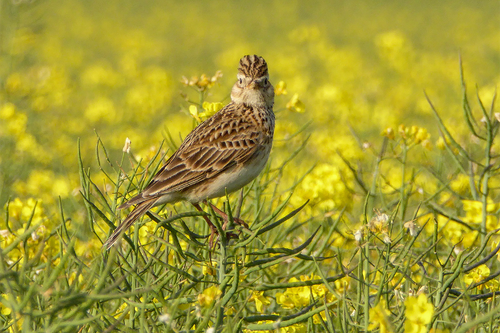
  • Basic knowledge of ecology, meadow birds, and monitoring: central to this project is the accelerated sharing of knowledge about the ecology of both meadow birds and farmland birds among agricultural entrepreneurs and other land users, contractors, farm visitors, teachers, and students in agricultural education (higher professional education, secondary vocational education, and pre-vocational secondary education).
  • Knowledge platform and knowledge broker for meadow birds: this project focuses on developing and disseminating substantive and application-oriented knowledge about farmland birds. It does this through organizing knowledge meetings and by placing practical dossiers on the knowledge portal Boerenlandvogels of Groen Kennisnet.
  • Life IP Biodiversity for all: in this project, BoerenNatuur and VHL work closely together to exchange knowledge and teaching materials on the key themes for nature-inclusive agriculture. Additionally, the project focuses on didactic skills that can support teaching on these themes.
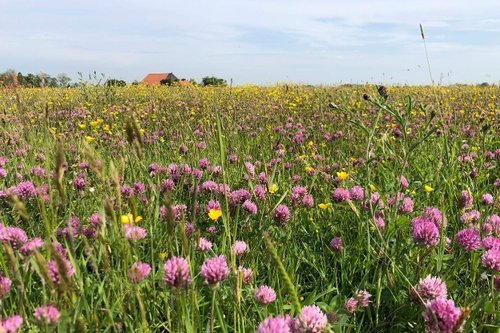
  • Optimisation of herb-rich grassland: this project aims to develop practical tools to improve the quality of extensive herb-rich grassland, focusing on both the added value for biodiversity and the dairy farm. The applied research group is particularly involved in the economic integration of herb-rich grassland into the dairy farm.
  • Herb-rich grassland Noord-Holland: this project focuses on monitoring herb-rich grassland and providing insight into the added value of such biodiverse grassland for farmers, nature, and society. This is being done at three demo locations, spread across three agricultural collectives.
  • Forward with the past: onto the clay (Mei it ferline foarút op ‘e klaai): within this broader project, the applied research group primarily focuses on the restoration and accelerated development of herb-rich grasslands as an important component of meadow bird management on clay soils. Specifically, it investigates the necessary steps to achieve the right environmental conditions for the successful development and establishment of herbs.
  • Farmers, citizens, and countryside creatures (Boeren, burgers en buitenbeesten): the aim of this project is to develop a knowledge system that integrates and makes available data on predation pressure from multiple sources. This is to support decision-making in habitat and population management to regulate predation pressure in meadow bird areas.
Publications

Publications

All publications of the applied research group can be found on Greeni, the online library of green higher education.

Knowledge circle

Knowledge circle

The knowledge circle of this applied research group (consisting of experts, lecturer-researchers, and professionals) shares and disseminates expertise (both within and outside HVHL), conducts research, and contributes to the development of new knowledge. Additionally, the knowledge circle acts as a bridge between theory and practice, contributing to the professionalization of the field.

The applied research group works structurally with the following programs:

Knowledge partners:

Additionally, professor Martijn van der Heide is a special professor of Nature-Inclusive Rural Development at the University of Groningen.

Want to know more?

Want to know more?

Are you interested in the applied research group, or do you want additional information? Do you have questions, tips, or suggestions? Don't hesitate to contact us. You can also contact us for lectures and presentations in the field and at conferences.

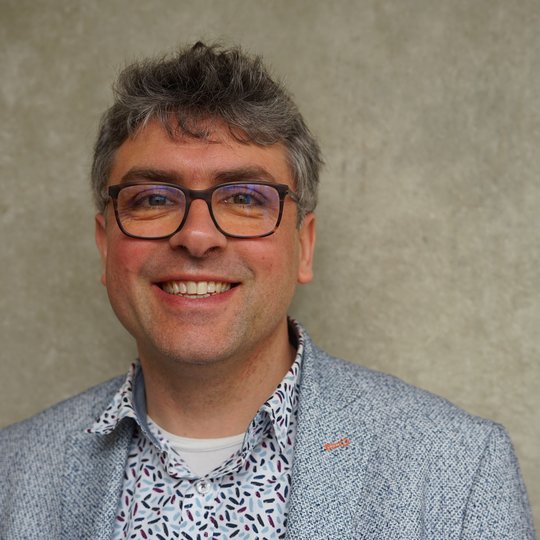
Martijn van der Heide
Professor of Biodiversity in Rural Areas

E-mail: martijn2.vanderheide@hvhl.nl
Telephone: +316 41 75 45 47

Highlighted projects

The applied research group works on various projects to strengthen agro-biodiversity and promote a sustainable agricultural sector. The results are used in education and training to enhance quality and share the latest insights with students and the field.