Animal & Environment
Research on animal husbandry and ecosystems and a nature-inclusive agricultural sector.
Open days
-
Online Open Day
4 June



Research on animal husbandry and ecosystems and a nature-inclusive agricultural sector.
Online Open Day
4 June
Online Open Day
4 June
Research on animal husbandry and ecosystems and a nature-inclusive agricultural sector.
The applied research group Animal & Environment is building a world where animal welfare and nature-inclusive agriculture go hand in hand. With innovative technologies and a holistic approach, we are redefining how humans, animals, and nature coexist. Our mission? A sustainable future where the well-being of all living beings is paramount. Curious about how we are transforming the agricultural sector? Discover how we contribute to a healthy, green planet through collaboration and forward-thinking.
The applied research group Animal & Environment strives to develop animal-friendly husbandry and ecosystems, as well as a nature-inclusive agricultural sector. The research group leverages current societal dynamics to further build nature and climate-inclusive systems with attention to the welfare of humans and animals. This is achieved according to the OneWelfare concept: an integrated, interdisciplinary approach where our living environment is redefined. This is done in a way where humans, animals, and nature share space and interact sustainably, with animal welfare as an important principle and the acceptance of the uniqueness of animals as a growing norm in society.
The applied research group originates from the research lines of the applied research groups 'Sustainable Dairy Farming' (2014-2024) and 'Smart Animal Welfare Management' (2022-2024). The current research lines build on these and are developed across different disciplines with mutual synergy. There are five, including two associate applied research groups:
In each of these, the interaction between humans and animals is central. Characteristic of all research lines is the integral and multidisciplinary approach to animal-related issues, where sociological, ecological, and (socio)economic factors play a role. The research lines all contribute to a transition towards a sustainable living environment for animals in relation to humans and the environment. They achieve this through the joint development and application of methodologies:
All publications from the applied research group 'Animal & Environment' can be found on Greeni, the online library for green higher education.
The knowledge network mainly includes researcher-lecturers associated with the Animal Husbandry and Animal Management programmes. They are directly or indirectly involved in designing and implementing research projects and disseminating the developed knowledge into education.
Titia Fokkema-van der Ploeg In 2023, researcher-lecturer Titia Fokkema-van der Ploeg received the NWO PhD grant for teachers. Titia is part of the knowledge network of the applied research group, is a veterinarian, and works as a specialist in animal health and young stock for the Animal Husbandry programme. Over five years, she, along with fellow researcher-lecturers and students, is researching the impact of the cow on the health and welfare of her calf. In close collaboration with the Adaptation Physiology Group of Wageningen University, she utilises her research for writing a dissertation.
The applied research group Animal & Environment supports and inspires various VHL programmes:
If you want to know more about the applied research group, or if you have a research question, please send an email or call lector Wiepk Voskamp-Harkema:
Wiepk Voskamp-Harkema
Lector Animal & Environment
E-mail: wiepk.voskamp@hvhl.nl
Phone: +316 537 673 57
Marko Ruis
Associate lector Animal-friendly Husbandry of Production and Recreational Animals
E-mail: marko.ruis@hvhl.nl
Martijn Weterings
Associate lector Wild Animals in Nature
E-mail: martijn.weterings@hvhl.nl
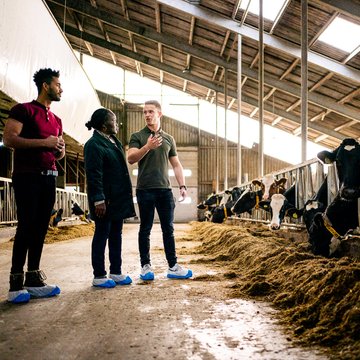
The ambition is to make Dairy Campus Leeuwarden the international Centre of Excellence for and by the entire Dutch dairy sector.
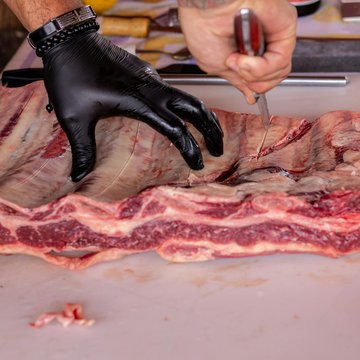
Project to form an integrated overview of labels, measurement methods and sustainability criteria for sustainably produced meat and consumers' wishes.
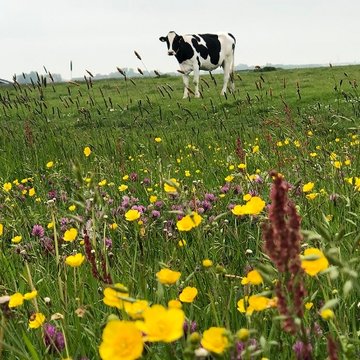
Research into the effect on yield, forage value, soil, insect supply for meadow birds and introduction of herb-rich grassland on dairy farms.
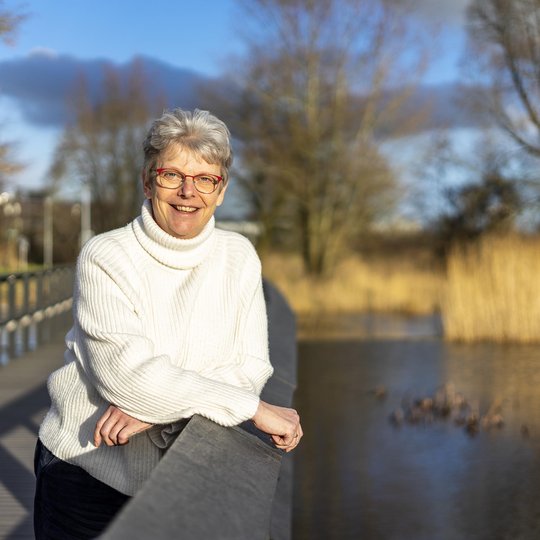
As of 1 February 2024, Wiepk is lector Animal & Environment. In the applied research group, she collaborates with associate lectors, researcher-lecturers, PhD candidates, practical lecturers, and students through practice-oriented research to contribute to a sustainable living environment, with nature and climate-inclusive, animal-friendly systems that ensure the welfare of both humans and animals.