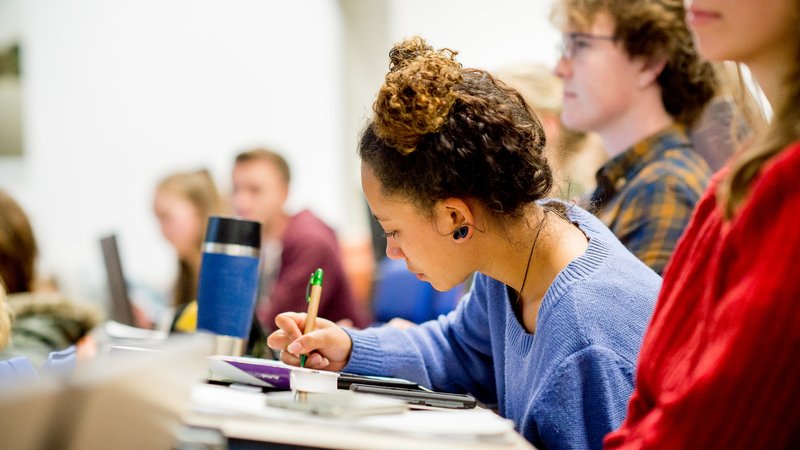

An academic year at International Development Management consists of four blocks, each with one or two courses. You will spend about 15 hours in the classroom each week, and about 25 hours for teamwork and individual assignments. Year 1 is a more general year, after which you deepen your knowledge in years 2 and 3 with elective courses, two internships and a minor. You finish your study programme with a graduation assignment at an organisation or company.
In this year, you first focus on the international cooperation sector. Then you delve deeper into themes, together with lecturers who have a lot of experience in the field. For instance, you will investigate a climate crisis, learn what a production chain looks like and investigate equality and inclusiveness. You will learn how to interact with people from different cultures. And you will develop an open attitude and skills to collaborate and communicate in an international environment. You will put these tools and skills into practice during a trip abroad. And you will start learning a new language such as Spanish, and strengthen your academic English.
You follow these (and other) subjects in year 1:
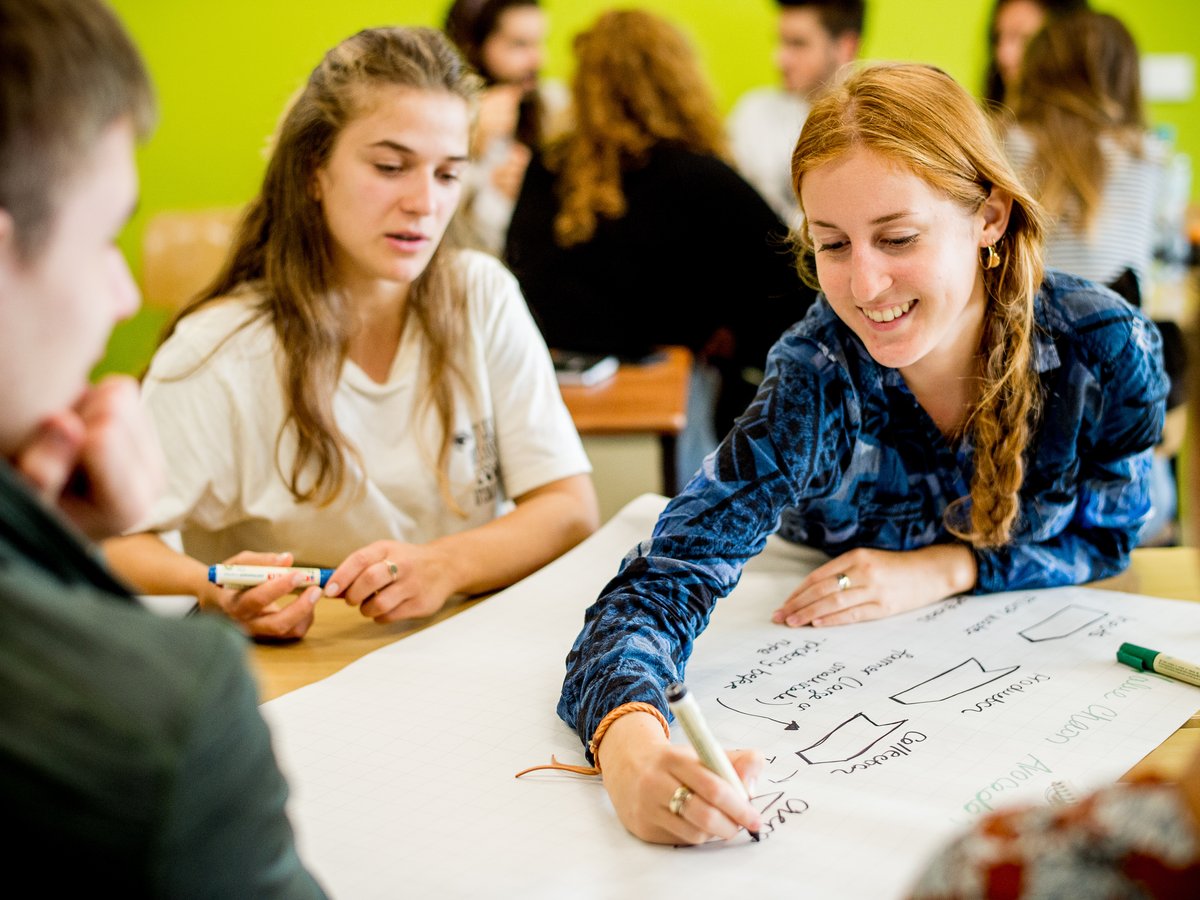
The second and third years are dedicated to further deepening. In year 2, you do a ten-week internship at home or abroad, for example at Oxfam Novib, Amnesty International, Fairtrade International or the Red Cross. You then do research for an organisation such as Save the Children or World Vision, learn about power structures and select your electives based on the five themes.
You start year 3 with a major multidisciplinary course. You work on an issue together with students from other study programmes. This allows you to solve a problem from different perspectives. This is followed by a 20-week internship or a minor at home or abroad, for example:
If you did an internship in the third year, you would now do a minor. And vice versa. Finally, you throw yourself into a graduation assignment. You choose your own company or organisation in the Netherland or abroad and help think about the subject and the final product (such as a report, video or course).
| Year | Period 1 | Period 2 | Period 3 | Period 4 |
|---|---|---|---|---|
| 1 |
History of international development Working methods in international development |
Exploring food chains Climate and environmental crises |
From inequality to inclusion Inspiring for change |
Equitable and resilient food systems |
| 2 | International internship |
Research in action Power in transition |
course with forestry management 1 elective course (such as disasters & conflict or sustainable trade) |
2 elective courses (such as environmental justice or food security) |
| 3 | Multidisciplinary subject on stakeholder processes | Minor | ||
| 4 | Internship | Graduation project | ||
The relationship between nature and humans is at risk. You will learn about environmental degradation, historical injustices and human rights inequalities. And you work on sustainable solutions to restore that relationship.
The quantity, complexity and impact of disasters are increasing. Understanding the interaction between disasters and conflicts is crucial. You devise solutions to increase the resilience of local populations and plan for emergency response and disaster prevention.
Exclusion of minority groups, discrimination and polarisation are commonplace. You will explore advocacy and human rights, working towards an inclusive society.
Everyone has the right to access affordable, good and culturally appropriate food. But this is not the reality for a lot of people. You develop solutions to make communities healthy and resilient, through equitable access to food.
Many production chains of everyday products such as cotton, coffee and cocoa, are unsustainable and unfair. You will look for ways to empower small-scale producers, and make the chain more equitable, inclusive and sustainable.