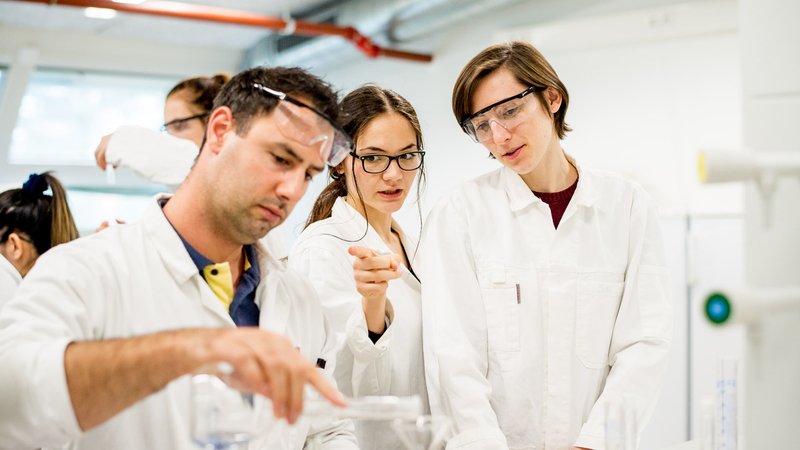

In food technology, you will gain theoretical knowledge and learn how to apply it in practice. You will discover all about food, ingredients and production methods. With its international character, this English-taught programme gives you the opportunity to study with interesting classmates from the Netherlands and far beyond. In the second half of your studies, you will work outside VHL during internships, your minor and final project.
In the first year, you will learn the basics; the chemistry, physics and biology of food and much more about what is involved in making food. Delve into the chemical reaction that causes the delicious smell of bread. Find out how to thicken a drink with a thickener or how yeast turns sugar into alcohol. You will also learn whether it is financially viable to launch a new product and explore what trends and developments are current. You learn in the classroom, during practicals but also on many field trips.
In the first year, you immediately get to work making products yourself. Together with your fellow students, you will put theory into practice!
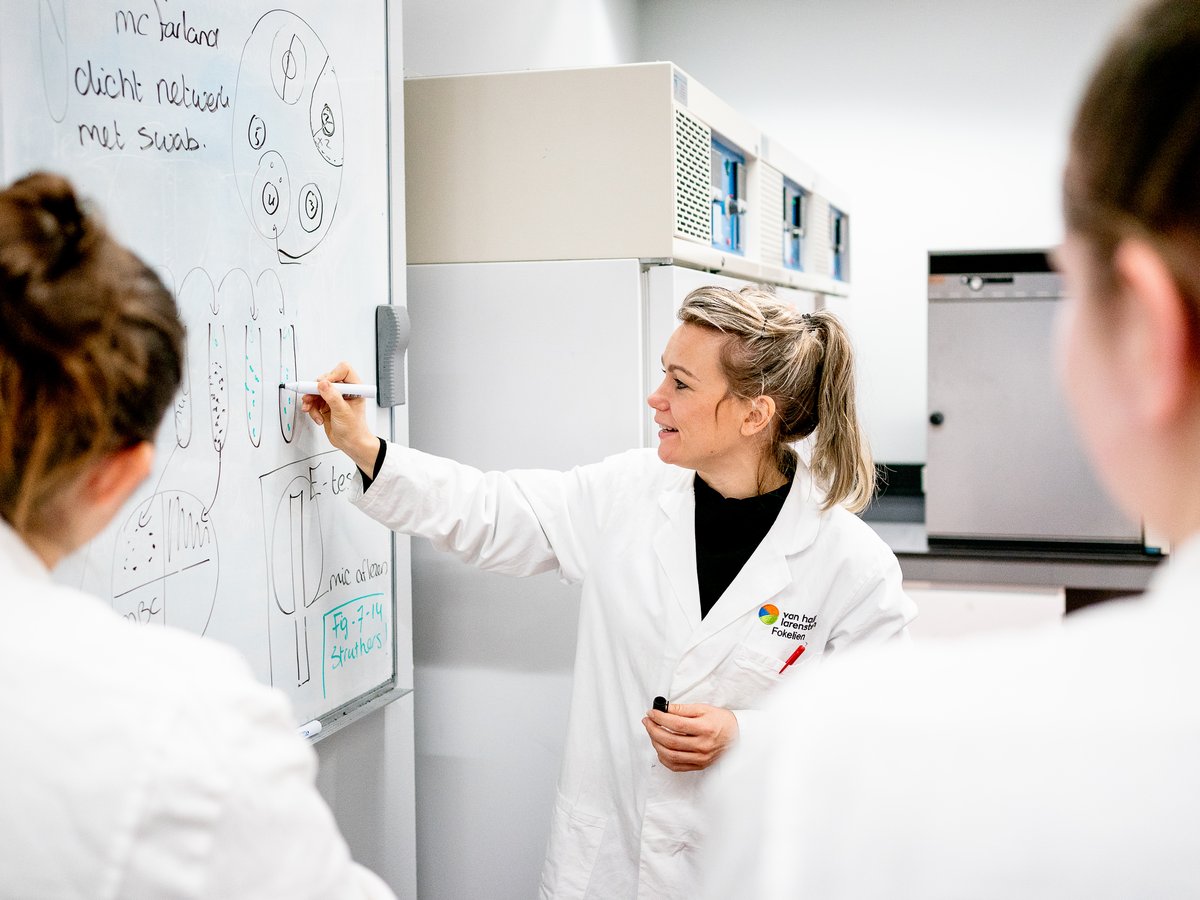
In the second and third years, you build on the knowledge from the first year. You will invent new products yourself, make products in the kitchen and the technology centre (in Leeuwarden). You calculate how the production process runs as optimally as possible, and check that processes run smoothly. In the third year, you will choose your specialisation.
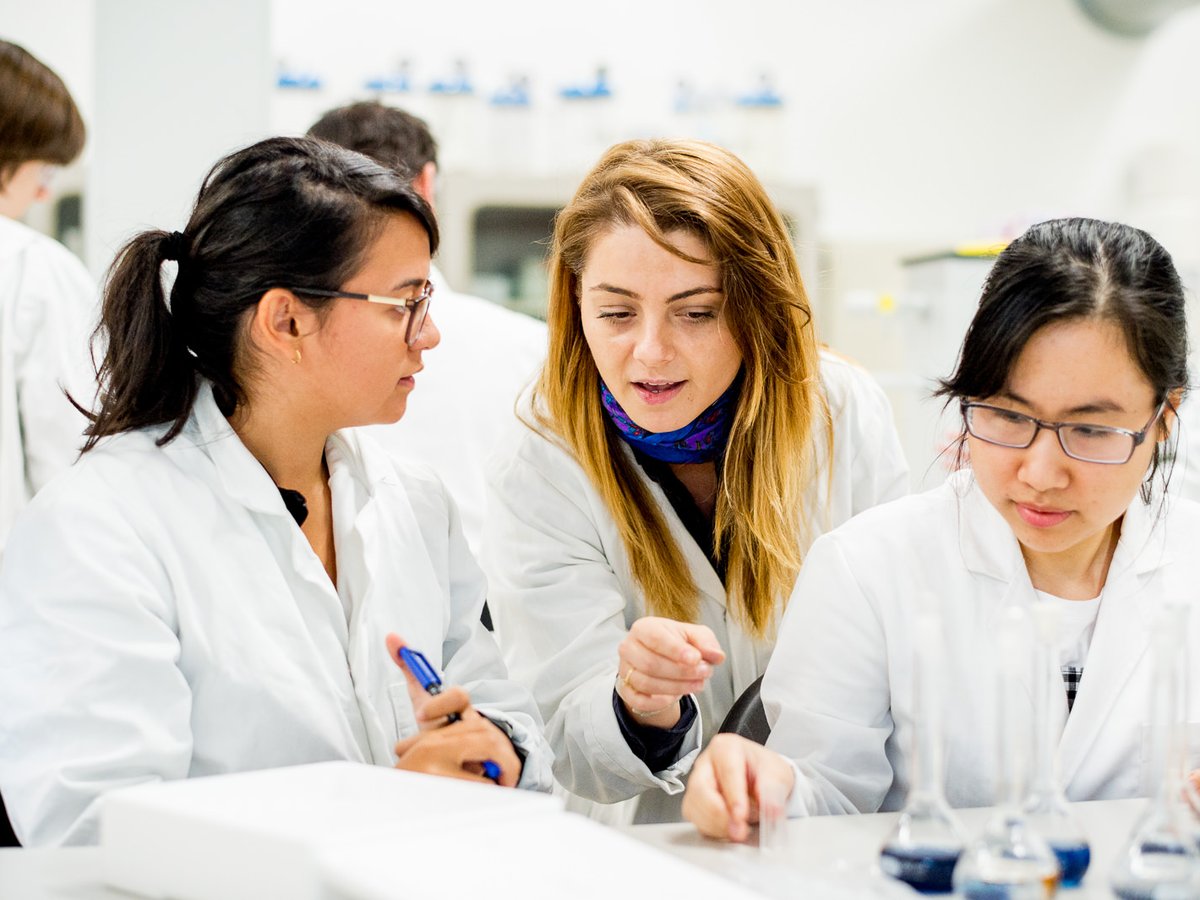
At the beginning of the second year, you will undertake a short internship. Later in the third and fourth years, you complete a minor, a longer internship and a graduation project at a company, in the Netherlands or abroad. You will learn how to interact with people from different cultures. And you will develop an open attitude and skills to collaborate and communicate in an international environment.
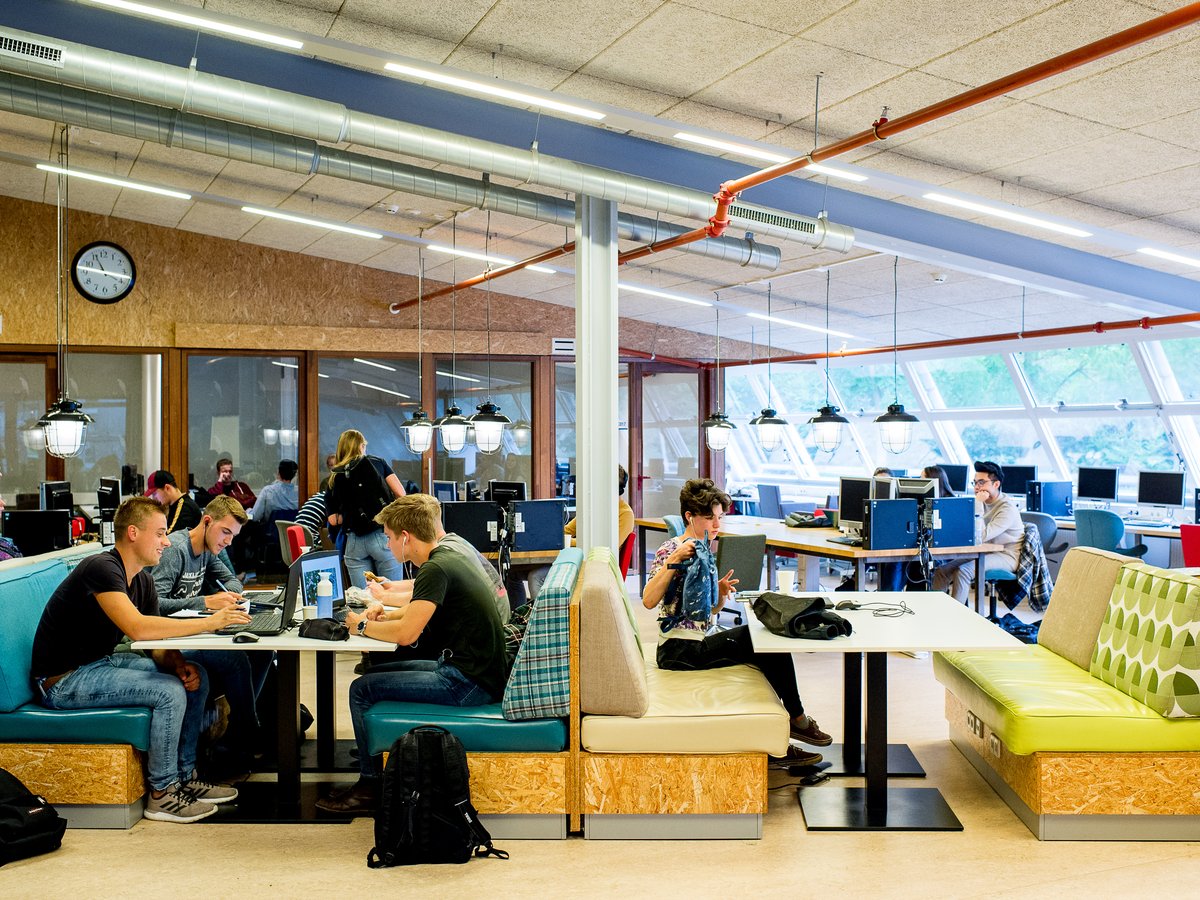
The final year is the time for the real thing. You undertake a longer internship (do your own practical assignment) or do your minor, depending on your choice in year 3. This might be in a company or research institute close to home, or on the other side of the world! After this internship, you will be ready for the conclusion of your study programme: the graduation project. During your graduation, often in a company, you show what you have learned by applying it in an assignment relevant to the company.
| Year | Period 1 | Period 2 | Period 3 | Period 4 |
|---|---|---|---|---|
| 1 | Sectors, food products and job roles | Processing, physics and chemistry | Quality and transitions | Product development and sustainability |
| 2 | internship |
Sensory Research Process technology |
Sustainable Entrepreneurship Food ingredients |
Food and Health Food Safety and Quality |
| 3 |
Specialisation: Food Innovation Management or Food Safety & Health |
Minor / Internship | ||
| 4 | Minor / Internship | Graduation project | ||
In the versatile world of product development, it all starts with an idea: can something new or better be invented? Then comes the technology: can you actually make it, and if so, how? Next, you explore the possibilities of large-scale production and market introduction. Research and development of new products are crucial to maintaining a competitive market position and responding to consumer demands. The industry is eager for professionals who know what is and isn't possible! This specialisation is offered in English in Velp.
Healthy food is crucial for a healthy body, a fact increasingly recognised by many people. Fortunately! The industry is working hard to create products that are both tasty and healthy. The field of nutrition is constantly evolving: new products, production methods, hazards, and risks emerge at a rapid pace. Consumers have high standards. New facts about food safety and health need to be translated into legislation and regulations. To meet all these needs, specialists like you are required! Is this a challenge for you? This specialisation is offered in English in Velp and in Dutch in Leeuwarden.