Van Hall Larenstein University of applied sciences

Thijs and Casper face Bonaire’s wilderness for ecological restoration of Slagbaai

March 19, 2025

“My friends think I’m just relaxing on the beach in the sun…” sighs Thijs as he wipes the sweat from his forehead and pulls a cactus spine from his hand.

Open days

  • Online Open Day

    19 March

  • Online Open Day

    4 June

Thijs and Casper face Bonaire’s wilderness for ecological restoration of Slagbaai

Erosie en sedimentatie zijn een bedreiging voor de saliñas en het koraalrif

Open days

“My friends think I’m just relaxing on the beach in the sun…” sighs Thijs as he wipes the sweat from his forehead and pulls a cactus spine from his hand.

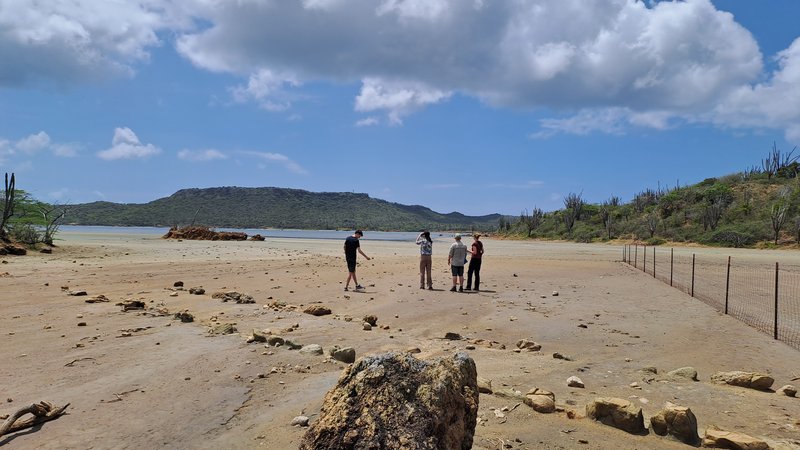
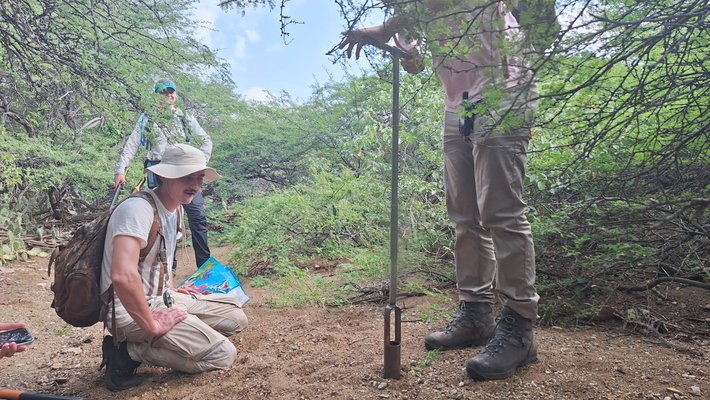
On hands and knees, Thijs and Casper crawl through the dry streambed. The dense undergrowth makes it nearly impossible to walk upright. The two students from VHL University of Applied Sciences are conducting research in Washington Slagbaai National Park, the largest protected nature reserve on Bonaire. Commissioned by the Stichting Nationale Parken (STINAPA) and the European Union’s Green Overseas Programme, a team of lecturers and students is working on a water management plan for the park. “My friends think I’m just relaxing on the beach in the sun…” sighs Thijs as he wipes the sweat from his forehead and pulls a cactus spine from his hand.

Studenten van HVHL nemen een bodemmonster in het Washington Slagbaai Park

From overgrazed plantations to ecological recovery

For years, STINAPA has been working on the ecological restoration of the former plantations. When the area was acquired in the 1970s, it had been largely deforested, and thousands of goats roamed freely. Overgrazing prevents the recovery of the original vegetation. Only cacti and thorny shrubs escape the voracious appetite of the feral goats. The barren soil retains little moisture and washes away during the heavy rains of the wet season. The ‘rooien’, or dry stream valleys, then turn into mudflows. As a result, the saliñas —the saltwater lakes that are vital for waterbirds— become silted up, and the fragile coral reef off the coast is affected. Additionally, erosion also damages the park’s roads: the park regularly has to close its doors to visitors because the roads have become impassable.

Parkopzichter George Thodé geeft uitleg aan het onderzoeksteam

Water management as the key to change

VHL is researching effective ways to tackle these water-related challenges. This green university has extensive expertise in water management, soil science, and forest management. The students involved are gathering data for a hydrological model of the park, which will provide insight into the impact of extreme rainfall. For this, detailed knowledge of the soil and vegetation is essential.

A day in the field: blood, sweat, and thorny shrubs

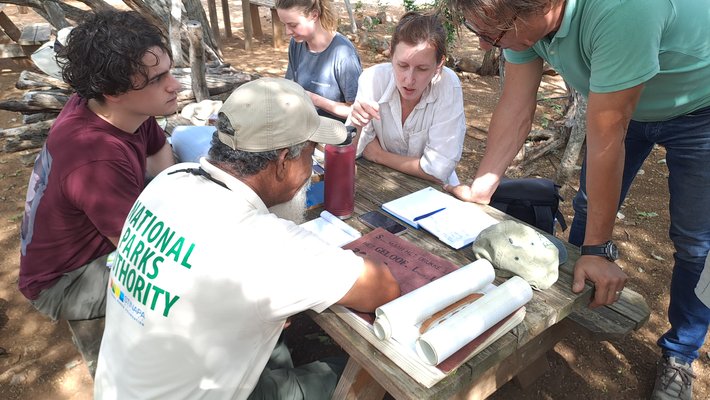
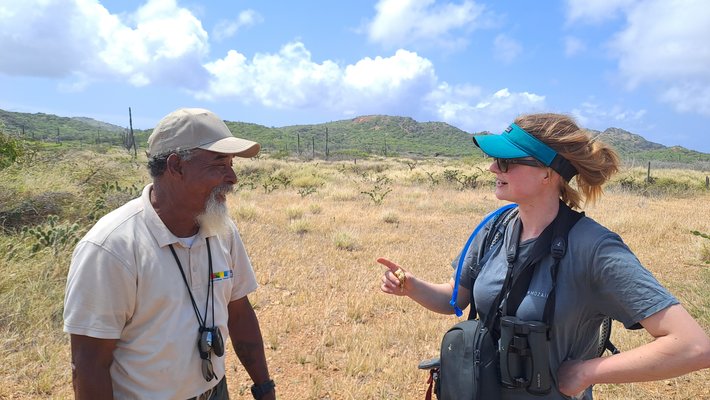
Today, park ranger George Thodé is guiding the team in the field. He points out how high the water rose during last year’s rains and identifies rare plant species. Casper carefully notes everything in his notebook, while Thijs collects a soil sample. “Welcome to the Antilles,” laughs George as the students get stuck in a thorny shrub. After a long, hot day in the field, the team drives back to the park entrance. “That was amazing,” grins Thijs before falling asleep in the back seat.


Parkopzichter George Thodé spreekt met docent Janne Nauta

From research to awareness: open evening and World Water Day

The insights from this research are not only valuable for Bonaire but also for other regions where water management plays a crucial role, as well as for education. During the open evening this Thursday, students and researchers will showcase how they make the world a little better step by step through hands-on research. This ties in perfectly with World Water Day on Saturday, an international day that highlights the importance of clean water and good water management. Through research, awareness, and collaboration, we can better tackle water-related challenges worldwide.