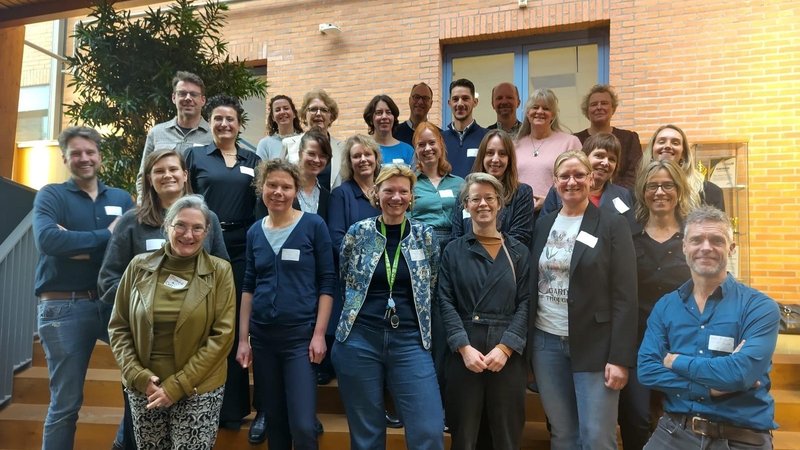
The MAP project brought together seven vocational and seven higher professional institutions, including VHL, over the past two years to conduct research and develop interventions around plant-based eating among vocational students. The event brought together researchers, lecturers, policymakers, and practice partners to reflect on what works—and what does not—when encouraging plant-based choices among vocational students.
Resistance is mostly passive
Research shows that vocational students are not fundamentally opposed to plant-based eating. Resistance to reducing meat consumption is mostly passive and linked to habitual behaviour and a psychological distance from abstract sustainability and climate messages. Information alone therefore rarely leads to behavioural change. Effective interventions build on existing routines and focus on taste, affordability, convenience, and health.
Sharing insights and vocational challenges
During the symposium, these insights were explored further in two parallel breakout sessions. One session focused on research into how vocational students think about plant-based food and where opportunities for change lie. The other session discussed the vocational challenges carried out at various institutions and what they produced in terms of ideas, learning experiences, and impact.
A key outcome of the project is that vocational students, when actively involved as co-designers, develop feasible, context-specific solutions that resonate with their own daily lives.
At the final symposium, the digital toolbox “Getting started with vocational challenges” was also launched. The toolbox includes a wide range of challenges and intervention ideas developed by vocational students for their fellow students. It provides practical tools for lecturers, policymakers, caterers, and curriculum developers to integrate plant-based eating into education and practice in a structured and accessible way. The toolbox can also serve as an example for addressing other societal themes and is freely available via the QR code below.
From project to lasting impact
The closing session looked ahead to the sustainable impact of the project results. The insights into the target group and the use of challenges as an educational approach provide concrete starting points to embed plant-based choices permanently in education, school canteens, and policy. Structural integration, repetition, and collaboration with partners in and around vocational schools are crucial.
Conclusion
The key conclusion of the symposium: vocational students are sometimes seen as a difficult group in the protein transition, yet they represent a powerful lever for change. Behavioural change does not come from persuasion alone but by jointly reshaping the environment, skills, and social norms with vocational students as active partners in designing solutions.