Purpose of the study
The research aims to understand how beavers move within their habitats, how their behaviour changes with fluctuating water levels, and which factors make dikes and embankments vulnerable to burrowing. By tagging multiple beavers in different areas, researchers gather new insights into their behaviour and interactions with the environment. This information helps assess the risk of burrowing damage and develop measures to prevent it.
Elze Polman, project leader at the Mammal Society, explains: “Tagging beavers helps us understand which areas they choose during high water. Often, during prolonged flooding, dikes are among the few dry places where beavers can take refuge, increasing the risk of burrowing damage. By identifying the factors that make a location safe for beavers, we can design shelters that protect both the animals and water infrastructure, reducing damage and societal costs.”
Talented water engineers
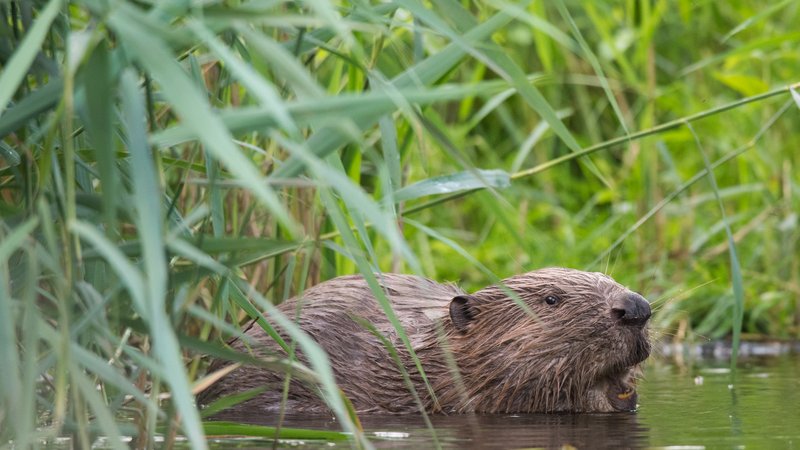
In 1826, exactly 200 years ago, the last beaver in the Netherlands was killed. Reintroduction began in 1988. Today, beavers live in many areas and contribute positively to biodiversity. Their gnawing produces deadwood, attracting other animals and insects, and their dam-building creates ponds that benefit species such as salamanders.
Risks of burrowing
Beavers’ building, gnawing, and burrowing skills can pose risks near dikes and embankments. Burrowing can destabilise these structures, and their tunnels are difficult to detect because digging often begins underwater. These extensive tunnel systems can collapse, which is especially dangerous beneath dikes, railway embankments, or highway ramps.
Balancing movement and water safety
Insights from the study will support timely, future-proof measures that allow beavers to move freely and contribute to biodiversity, while minimising risks to people and water safety.
The tagging study is part of the two-year project ‘Burrowing by beavers and (water) safety’, co-financed by Regieorgaan SIA (part of the Netherlands Organisation for Scientific Research, NWO), STOWA, Rijkswaterstaat, ProRail, and the water authorities Drents Overijsselse Delta, Brabantse Delta, De Dommel, Aa and Maas, and Rivierenland. All research results will be shared via the Beaver Knowledge Centre.