Van Hall Larenstein University of applied sciences

Educational cooperation outside Europe

There are also plenty of opportunities for students and staff outside Europe. Our university of applied sciences works with strategic partners within what is known as Living Labs.

Open days

  • Online Open Day

    19 March

  • Online Open Day

    4 June

Educational cooperation outside Europe

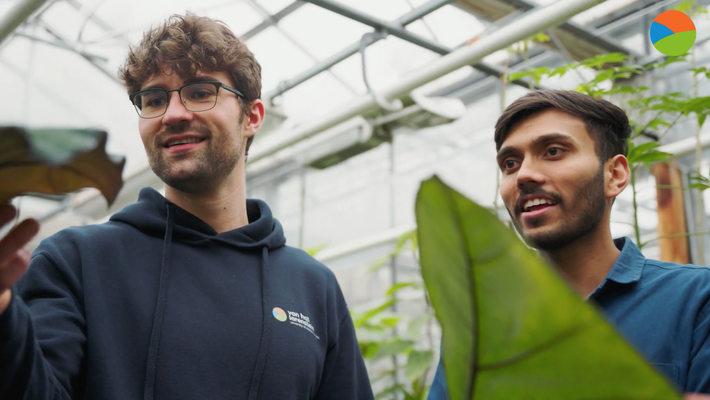
Twee internationale studenten in werkhoek achter laptop

Open days

There are also plenty of opportunities for students and staff outside Europe. Our university of applied sciences works with strategic partners within what is known as Living Labs.

Living Labs outside Europa

Would you like to take the step to gain international experience? There are also plenty of opportunities for students and staff outside Europe. Our university of applied sciences works with strategic partners within what is known as Living Labs. Academic parties have an important, initiating role in these labs.

What are the benefits of international experience?

  • Getting to know other cultures, learning environments, and education systems
  • An extra challenging and valuable experience
  • Broadening your horizons and raising your international profile in real-life situations
  • Applying acquired knowledge and experience in your own studies or education

Working together on a regular basis strengthens the bond between partners. This in turn leads to joint opportunities and new initiatives.

We collaborate with a number of universities in India, Indonesia and Kenya.

India

Since 2010, we have had a special partnership with the Baramati College of Agriculture and Allied Sciences (Baramati) in India. This consists of a unique educational model with associated study programmes. As a student, you get to study partly in India and partly in the Netherlands. Students from India can graduate with both a VHL diploma and an Indian MPKV diploma.

This partnership encourages entrepreneurship and innovation, both in the region, and between India and the Netherlands. The two institutions have set up incubation centres for start-ups. At these centres, students can gain practical experience during their studies and, like alumni, develop innovative ideas. With this partnership, as a university of applied sciences, we also contribute directly to the development of new products and services.


Twee studenten International Agribusiness & Trade HVHL

Indonesia

The research and education partnership between the Netherlands and Indonesia has a long history. Sustainable food production is a key theme in this context. Both countries are committed to the Paris Agreement and the SDGs, with special attention to strong partnerships in sustainable agriculture and food security. The focus lies on technology and knowledge in agricultural chains to enhance farmer welfare and improve food security.

Education

his is where HVHL has a role to play by collaborating with a number of educational institutions in Indonesia. We offer exchange programmes for students and staff members. We collaborate with:

  • Politeknik Pertanian Negeri Kupang
  • Institut Pertanian Bogor
  • Universitas Lambung Mangkurat

Research

We conduct applied research together and build on previous research and collaborations. The most pressing themes on our research agenda are:

  • The transition to climate-adaptive agriculture
  • Agribusiness models and governance
  • Land and water management
  • Forestry and nature management

We engage in joint initiatives around learning and capacity development. We are also committed to ensuring that graduates meet the criteria and needs of the labour market.

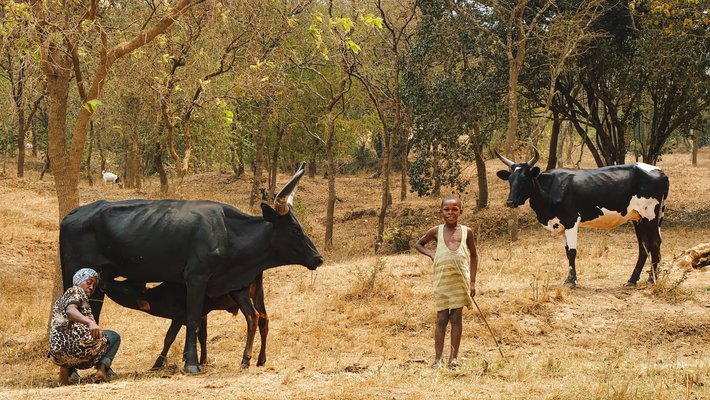
Koeien in Afrika met boeren gezin

Kenya

In Kenya, HVHL collaborates with two partner universities:

  • Mehru University of Science and Technology (MUST)
  • Egerton University (EGU)

Applied research track on food systems

Together with these universities, we run an applied research track on food systems and reducing food waste through experimental pilots. This Living Lab focuses on educational exchange. The expertise we share as a university of applied sciences centres on sustainable value chain development, business modelling, and climate adaptation in dairy farming and horticulture. With the knowledge and experience thus gained, the Kenyan universities in turn aim to exert influence on the dairy and horticulture sector in their own region.